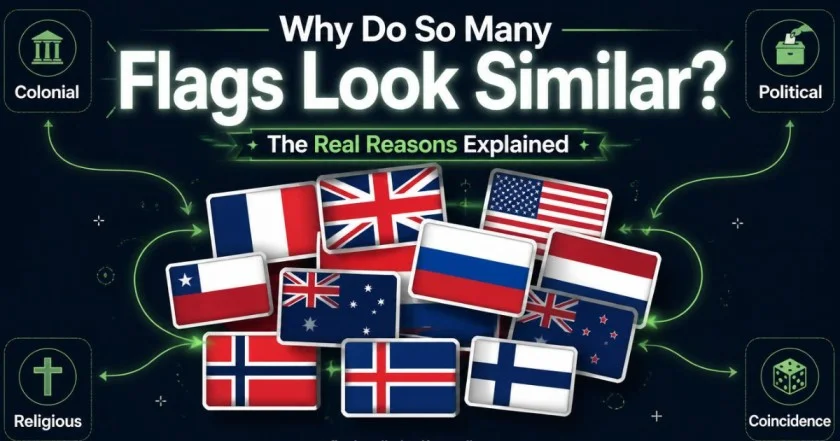
If you have spent any time playing Flagle or studying world flags, you have almost certainly noticed that a surprising number of them look like each other. Tricolors in the same three colors. Crescents and stars on green fields. Red, white, and blue in horizontal stripes. At first this feels like a design failure, as if nobody checked what already existed before creating a new flag. The reality is more interesting than that.
Flags look similar to each other for specific, traceable reasons. Some similarities are deliberate. Some are the result of political movements that spread the same symbols across entire regions. Some come from the practical limits of what works as a flag. And some are genuine coincidences that happen when many countries independently make the same design decisions. This guide covers all of them.
How Many National Flags Are There?
There are 195 countries officially recognized by the United Nations, each with its own national flag. A 2023 study published in Multimedia Tools and Applications used deep learning to quantify flag similarity and found that some flag pairs share up to 99% visual similarity. The researchers confirmed that most similarities trace back to cultural, historical, or regional connections rather than pure coincidence.
Table of Contents
- The Practical Limits of Flag Design
- Colonial Inheritance and Flag Families
- Political Movements That Spread Color Schemes
- Deliberate Imitation as a Political Statement
- Shared Religious Symbols
- The Most Confused Flag Pairs in the World
- Why This Actually Matters for Flagle Players
The Practical Limits of Flag Design
The single biggest reason flags look similar to each other is that flag design operates under severe practical constraints that push designers toward the same solutions independently, even when they have never seen each other's flags.
A flag has to work at a distance. It needs to be recognizable when it is small, when it is moving in the wind, when it is backlit by a bright sky, and when it is being reproduced in cheap ink on a cheap fabric. These requirements eliminate a huge range of design options immediately. Detailed illustrations fail. Subtle color gradients fail. Complex text fails. What survives these constraints is a short list of options: bold solid colors, simple geometric shapes like stripes and crosses, and a small number of recognizable symbols like stars, crescents, and suns.
The North American Vexillological Association publishes five basic principles of good flag design: keep it simple, use meaningful symbolism, use two or three basic colors, no lettering or seals, and be distinctive. These principles are not arbitrary. They reflect what actually works at flag scale. But when 195 countries are all following roughly the same practical guidelines with the same limited palette of colors and shapes, mathematical overlap becomes inevitable.
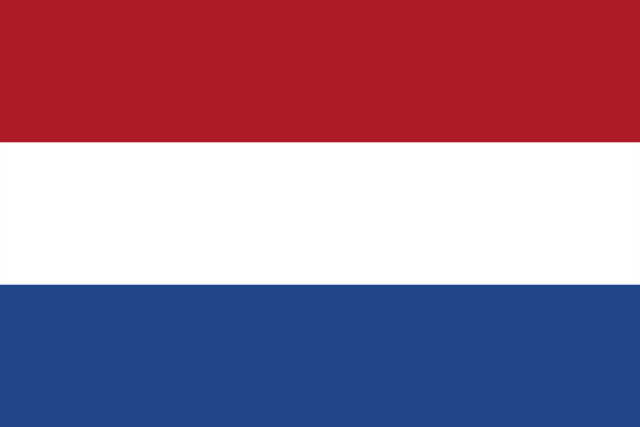 Netherlands
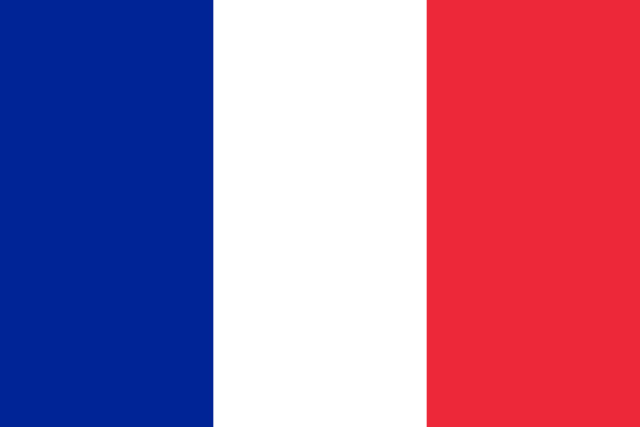 France
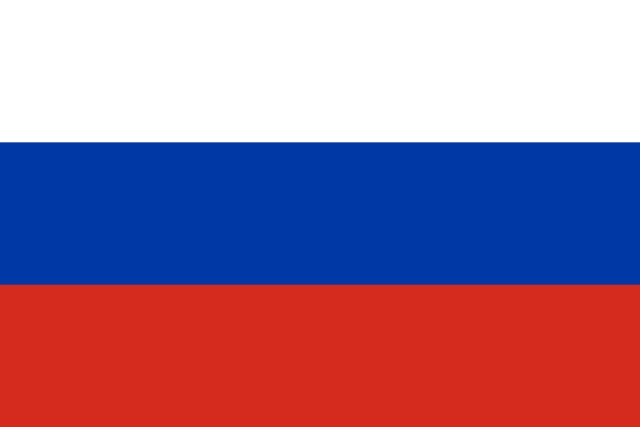 Russia
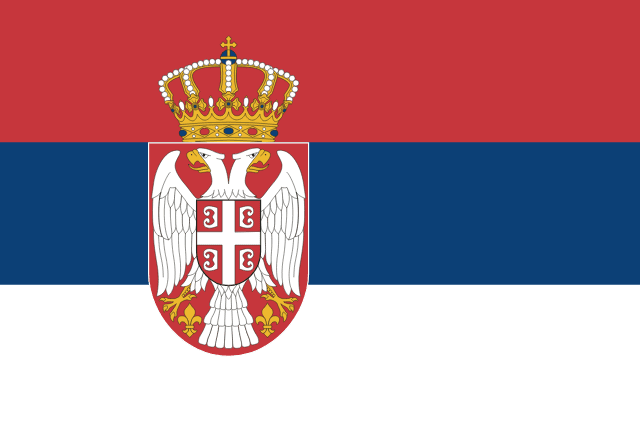 Serbia
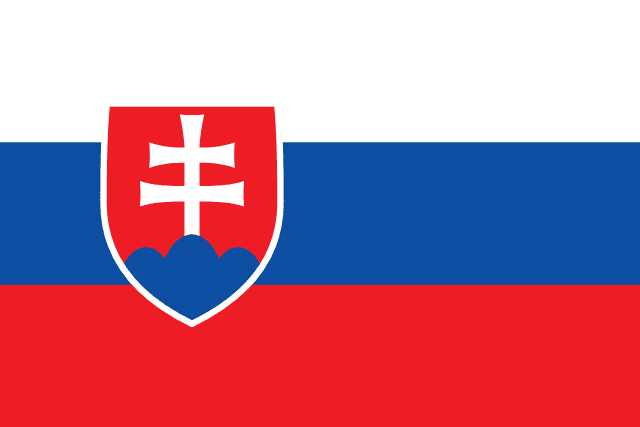 Slovakia
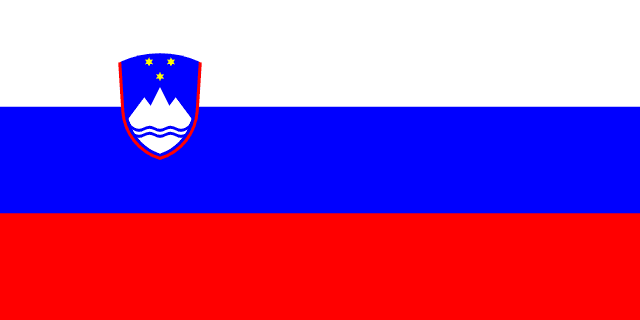 Slovenia
The Netherlands, France, Russia, Serbia, Slovakia, and Slovenia all use red, white, and blue. The Netherlands uses horizontal stripes. France uses vertical stripes. Russia uses horizontal stripes in a different order. Serbia, Slovakia, and Slovenia all use essentially the same layout as Russia, with small differences in the coat of arms. None of this happened by accident, but it also was not fully coordinated. Each country made decisions that made sense given its own history, and the overlap emerged from the limited design space they were all working in.
Colonial Inheritance and Flag Families
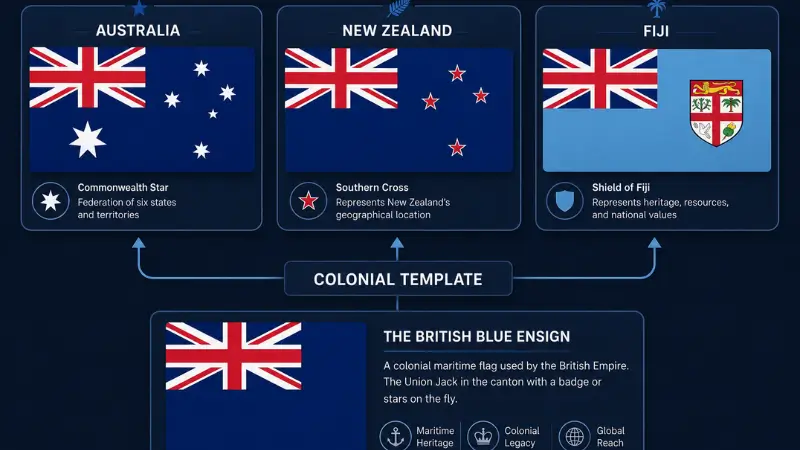
Many of the most striking similarities between flags come from colonial history. When a country gains independence from a colonial power, it faces a choice: completely reject the visual language of the colonizer, or retain some elements as a link to history. Many countries did both at once, keeping structural elements like a Union Jack in the corner while adding new national colors or symbols to the main field.
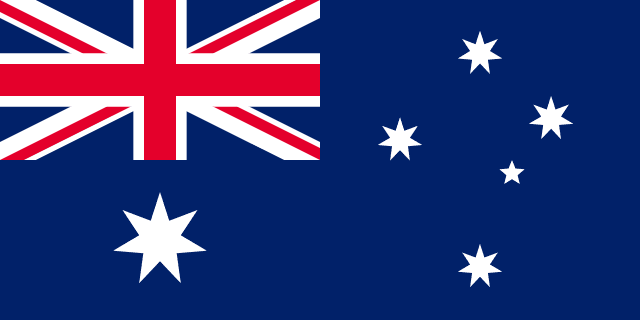 Australia
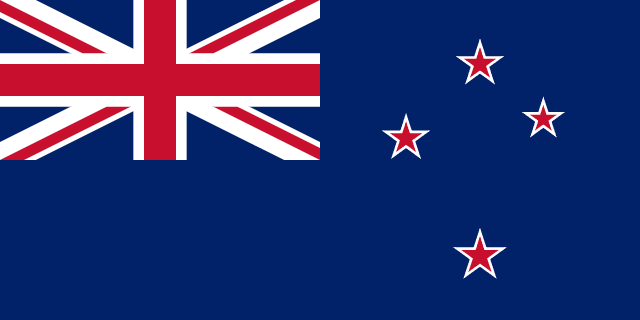 New Zealand
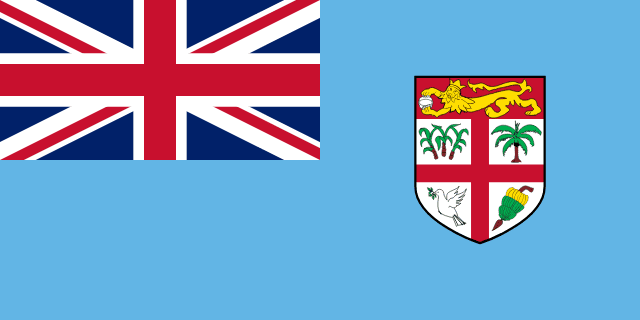 Fiji
Fiji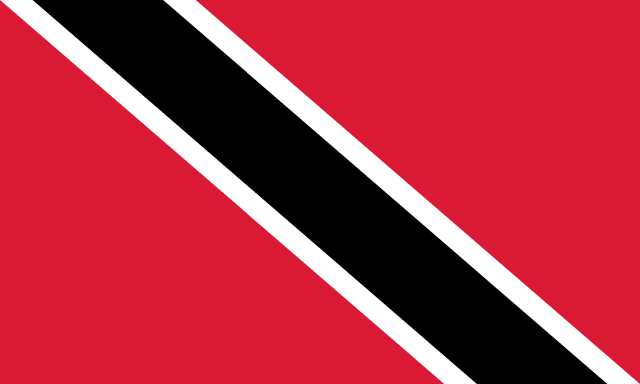 Trinidad
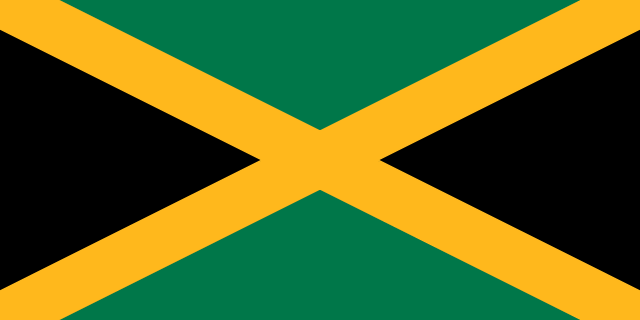 Jamaica
 Liberia
Australia and New Zealand are the most famous example. Both use the British Blue Ensign as their base, with the Union Jack in the upper left corner. The Southern Cross constellation appears on both flags. The practical difference is the shade of blue, the exact size of the stars, and the addition of a large Commonwealth Star beneath the Union Jack on the Australian flag. At a glance, from a distance, these two flags are extremely difficult to tell apart.
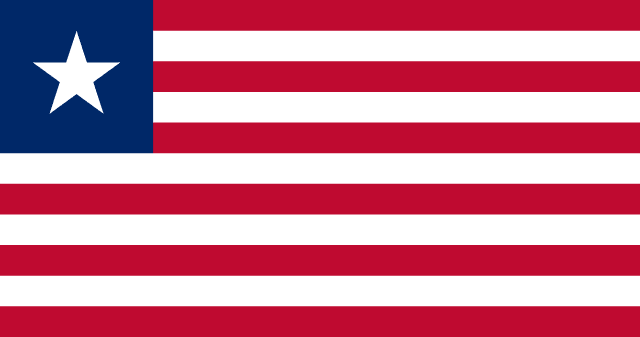
Liberia's flag is a deliberate tribute to the United States. Liberia was founded in the 19th century by freed American slaves, and its founders chose a flag that echoed the Stars and Stripes: red and white horizontal stripes with a blue canton in the upper left corner. Instead of 50 stars, Liberia has one. The similarity is intentional and carries explicit historical meaning.
The British colonial legacy created entire flag families. The Blue Ensign pattern appears on the flags of Australia, New Zealand, Fiji, Tuvalu, and several British overseas territories. The Red Ensign appears on other variants. These flags look similar because they descend from the same design template, applied consistently across the British Empire.
Political Movements That Spread Color Schemes
The most powerful force pushing flags toward similarity is political movements that deliberately adopt shared color schemes as symbols of solidarity. When a movement spreads across many countries, its symbolic colors spread with it.
Pan-Arab Colors
The Arab Revolt of 1916 produced a flag that combined red, black, white, and green, drawing on the colors of historical Arab dynasties. These four colors were explicitly adopted as symbols of Arab unity, and as Arab nations gained independence through the 20th century, many chose flags using all four colors. Iraq, Jordan, Kuwait, Sudan, the UAE, Syria, and Yemen all use combinations of red, black, white, and green. The similarities are not accidental; they are deliberate expressions of a shared political and cultural identity.
Pan-African Colors
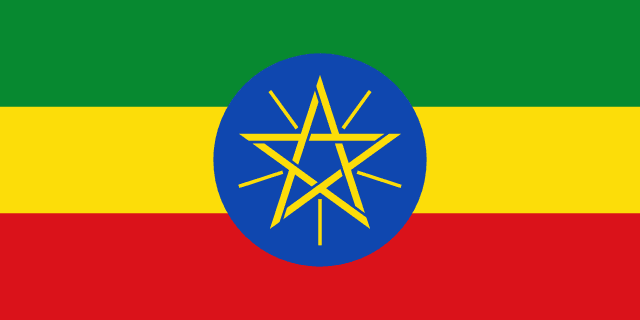
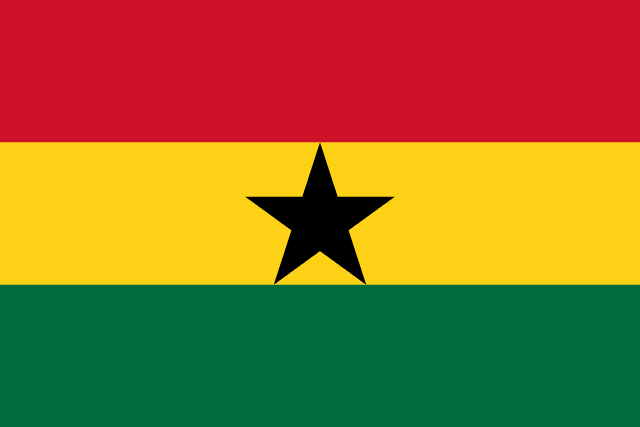
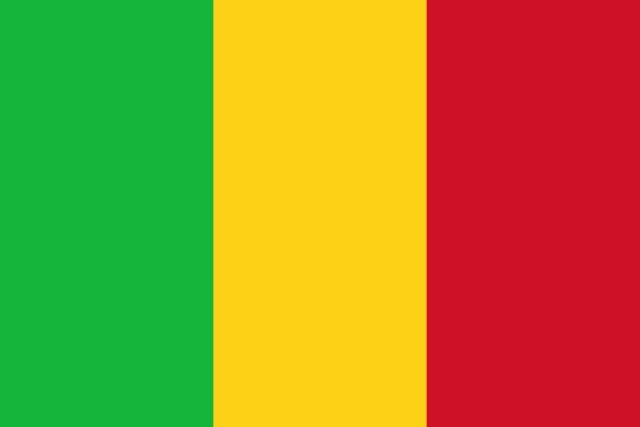
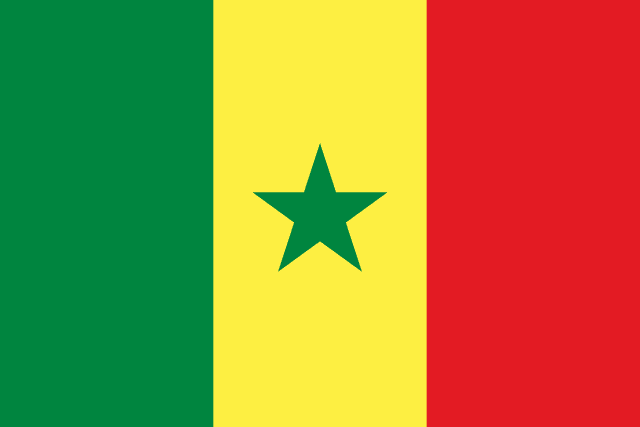
Ethiopia's flag predates European colonialism in Africa and carries enormous symbolic weight as a result. Ethiopia was the only African country to successfully resist colonization in the 19th century, making its green, yellow, and red tricolor a powerful symbol of African independence. When Ghana became the first sub-Saharan African nation to gain independence in 1957, it explicitly adopted these colors to signal its connection to the Pan-African movement. Dozens of other African nations followed, producing the dense cluster of green-yellow-red tricolors that make the African continent particularly challenging for flag players. Guinea, Mali, Senegal, Cameroon, and many others all use variations of the same three colors.
 Ethiopia
 Ghana
Ghana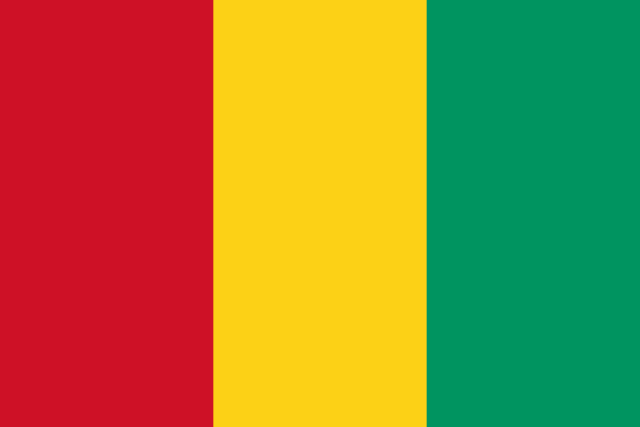 Guinea
 Mali
Mali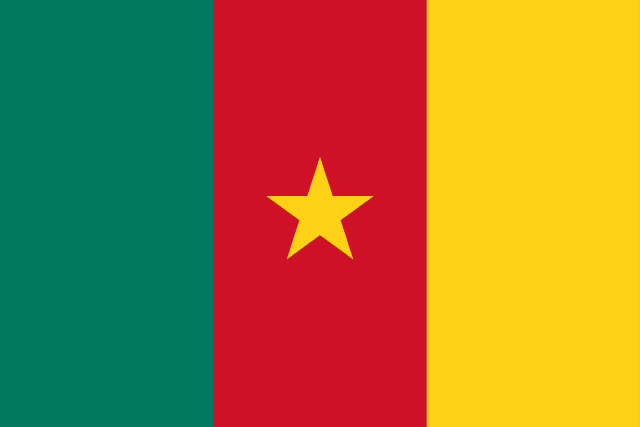 Cameroon
 Senegal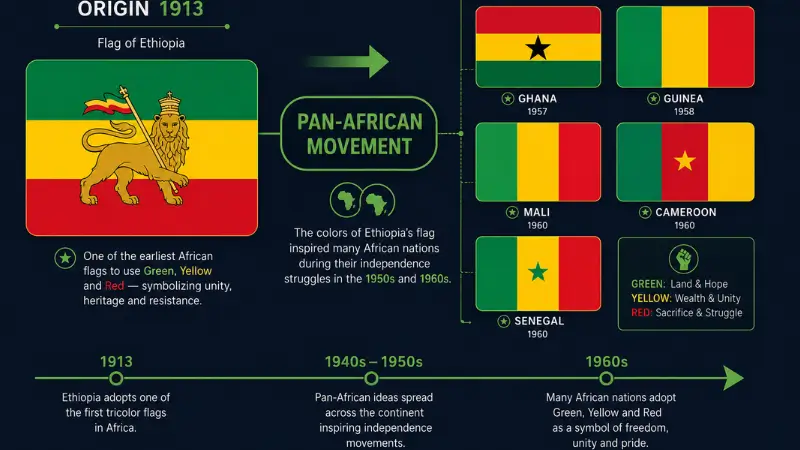
Pan-Slavic Colors
A Pan-Slavic congress in Prague in 1848 adopted blue, white, and red as the colors of Slavic unity, drawing from the Russian tricolor. As Slavic nations asserted their independence through the 19th and 20th centuries, many adopted these colors. Russia, Serbia, Slovakia, Slovenia, Croatia, and the Czech Republic all use blue, white, and red in various arrangements. The result is a group of flags that look almost identical at small sizes, distinguished mainly by the order of the stripes and the presence or absence of a coat of arms.
Deliberate Imitation as a Political Statement
Some flag similarities are not accidents of parallel design or inherited colonial templates. They are explicit political statements, where one country chooses a flag that resembles another to signal alliance, admiration, or shared heritage.
When Cuba designed its flag in the mid-19th century, it chose a design of red and white stripes with a blue triangle at the hoist containing a white star. Puerto Rico's flag, designed by independence activists who admired the Cuban struggle, reversed the colors of Cuba's flag: the stripes became blue and white, and the triangle became red. The visual echo was deliberate and unmistakable. Both flags announce their connection to each other.
New states emerging from larger unions often use modified versions of the parent state's flag. When the Soviet Union dissolved, many newly independent republics initially kept Soviet-era design elements before developing new flags. When a federation or union breaks apart, the successor states sometimes divide up the colors of the original flag among themselves, which is one reason the flags of former Yugoslav states share visual similarities despite representing different nations.
Shared Religious Symbols
Religion spreads across borders, and religious symbols travel with it. Two symbols in particular appear on so many flags that they create entire families of visually related designs.
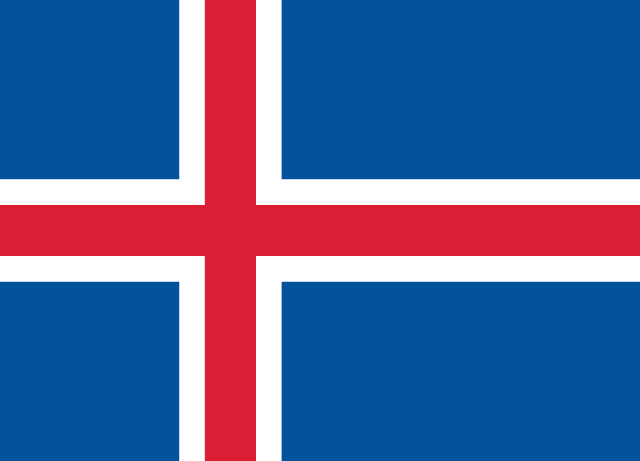
The Christian cross appears on the flags of Switzerland, Georgia, Greece, and all five Nordic nations. The Nordic cross, which is offset toward the hoist, appears on Denmark, Norway, Sweden, Finland, and Iceland. These flags look related because they are related: the Nordic cross design spread deliberately across Scandinavia as a symbol of shared Christian heritage and regional identity.
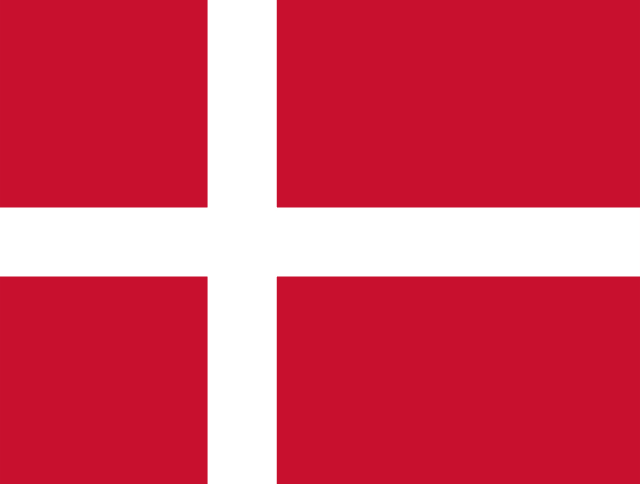 Denmark
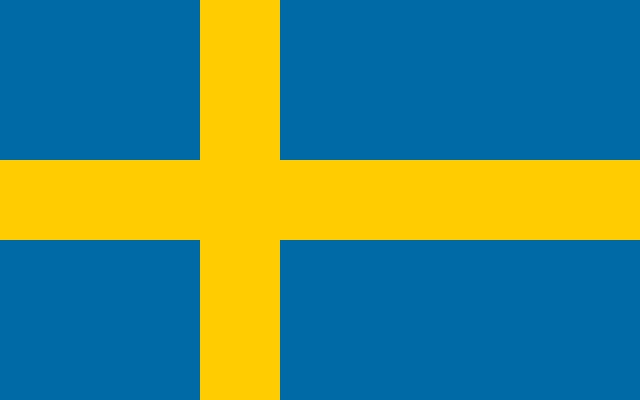 Sweden
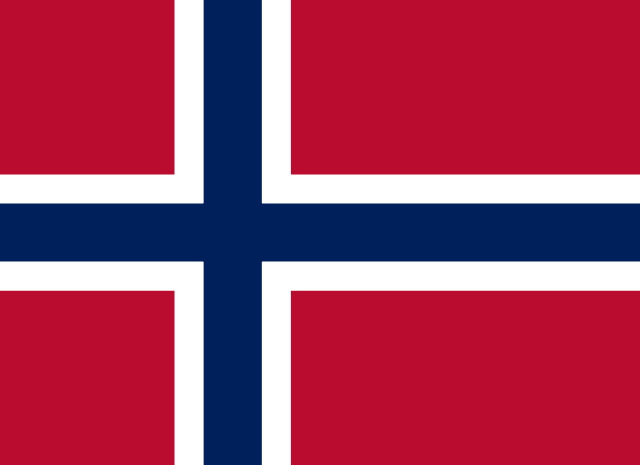 Norway
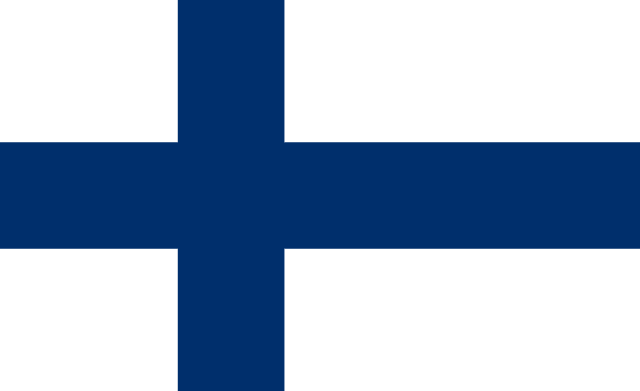 Finland
 Iceland
The Islamic crescent moon and star appears on the flags of Turkey, Pakistan, Algeria, Azerbaijan, Malaysia, Mauritania, Tunisia, Libya, and others. The crescent was not originally an Islamic symbol; it was adopted from the Ottoman Empire's military and administrative symbolism and gradually became associated with Islam as the Ottoman Empire positioned itself as the leading Islamic power. As Muslim-majority nations gained independence and looked for symbols of their religious identity, many adopted the crescent and star from the Ottoman tradition.
The Most Confused Flag Pairs in the World
Some flag pairs are so similar that even experienced players and vexillologists struggle with them. Understanding why they look alike makes them easier to separate.
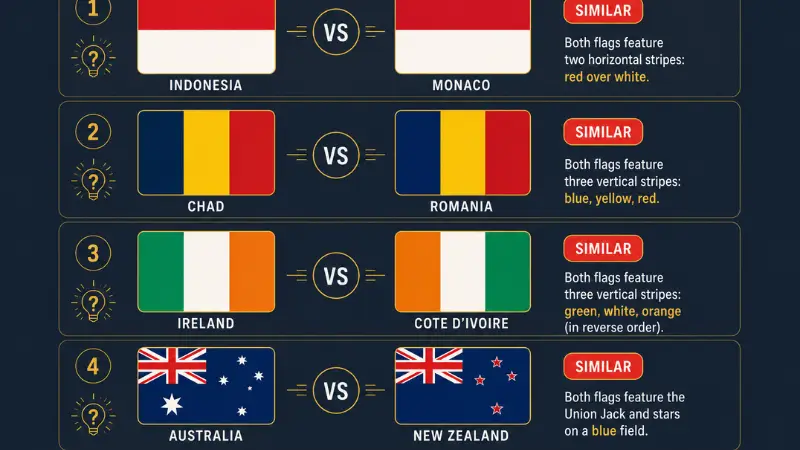
Indonesia and Monaco
Both are horizontal bicolors of red over white. The only visual difference is the aspect ratio. This similarity is a genuine coincidence: Indonesia adopted its colors from the Majapahit Empire's red and white banner, which predates any European influence. Monaco's red and white come from the coat of arms of the Grimaldi family, which has ruled Monaco since the 13th century. Two completely unrelated historical sources produced the same result.
Chad and Romania
Both are vertical tricolors of blue, yellow, and red, in exactly that order. Chad adopted these colors in 1960, drawing from the French tricolor tradition since Chad was a French colony. Romania has used variants of blue, yellow, and red since the early 19th century, drawing from the colors of Wallachia and Moldova. The United Nations has officially noted the similarity as a diplomatic complication. There is essentially no visual way to distinguish them on a screen.
Australia and New Zealand
Both use the British Blue Ensign with the Southern Cross constellation. The differences are the shade of blue, the number of points on the stars, and the Commonwealth Star below the Union Jack on the Australian version. At small sizes these differences are nearly invisible. The similarity is entirely the product of shared colonial heritage.
Côte d'Ivoire and Ireland
Ireland uses a vertical tricolor of green, white, and orange from left to right. Côte d'Ivoire uses the same three colors in reverse order, orange, white, and green. Ireland's design dates to 1848 and draws on the French tricolor tradition. Côte d'Ivoire's flag was adopted at independence in 1960. The similarity was noted at the time but neither country changed its design. In Flagle, the distance indicator is the only reliable way to tell them apart.
The Easiest Way to Use Similarity in Flagle
When you encounter a flag that looks like another flag you know, the similarity itself is a clue. If you see red over white and you know it is either Indonesia or Monaco, your next guess should be a country positioned between Southeast Asia and Western Europe. The distance and direction from that guess will tell you which hemisphere you are in, and that resolves the pair immediately. Read our distance indicator guide for the full method. This geographic disambiguation approach works for every confusing pair on this list.
Why This Actually Matters for Flagle Players
Understanding why flags look similar changes how you approach the game. Instead of treating similar flags as a frustrating obstacle, you can use the patterns of similarity as geographic information.
When you see Pan-Arab colors, you know you are looking at the Middle East or North Africa. When you see a Nordic cross, you know you are in Scandinavia. When you see green, yellow, and red in horizontal stripes, you are almost certainly in sub-Saharan Africa, with Bolivia as the main exception. When you see a Union Jack in the corner, you are looking at a Commonwealth nation in the Pacific or Caribbean.
These regional patterns reduce a field of 195 possible answers to a much smaller group before you have even made a guess. Your first guess then becomes a geographic probe that generates distance data to distinguish between the candidates. The players who consistently solve flags in two or three attempts are the ones who have internalized these regional color families and use them to narrow the field before committing to a specific country.
For more on building this geographic intuition, read our guides on what flag colors actually mean, the best starting countries for Flagle, and how to improve your overall score. Then test what you have learned on the Daily Challenge, where one flag per day gives you a focused opportunity to apply these patterns under pressure.