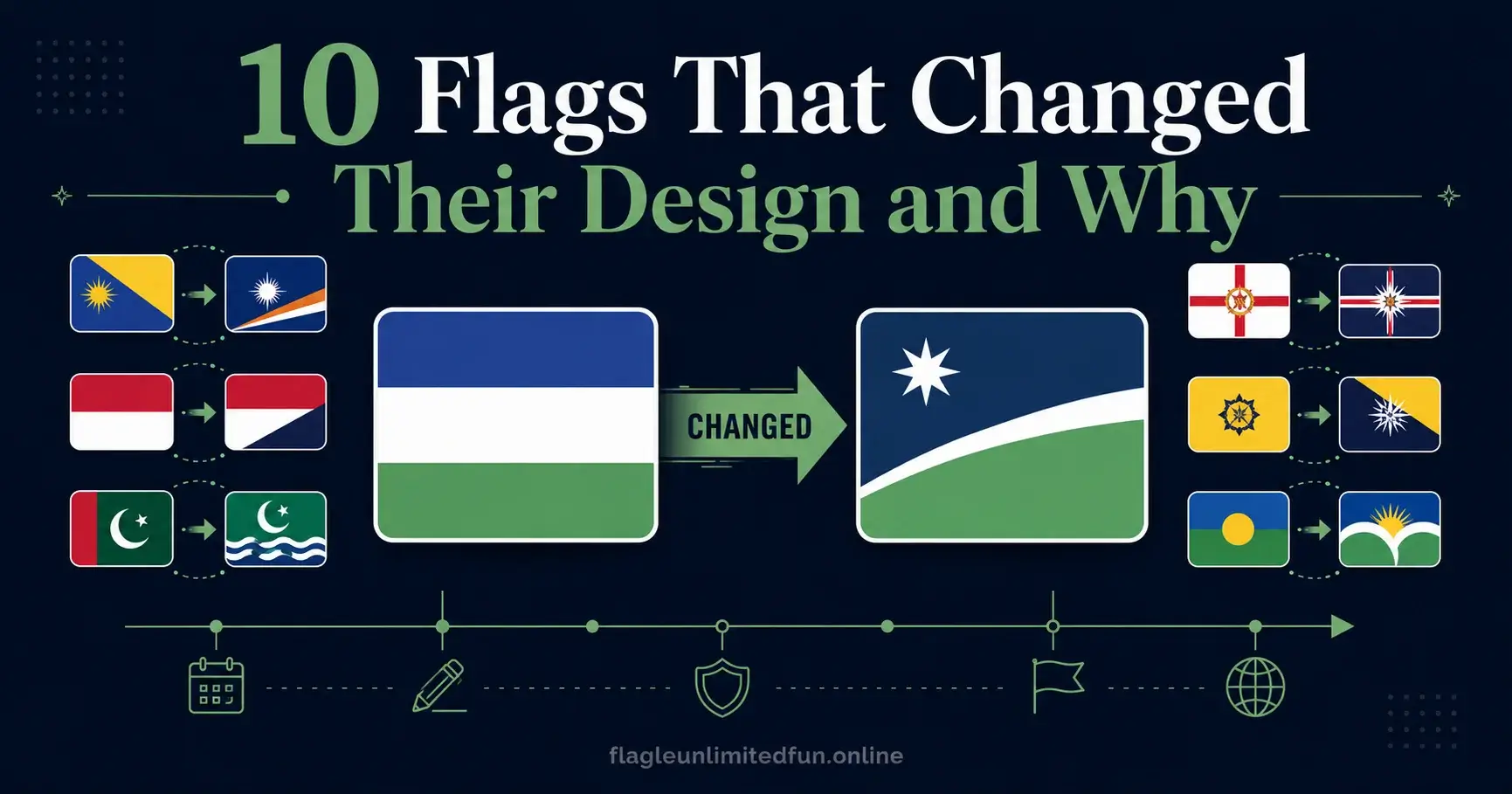
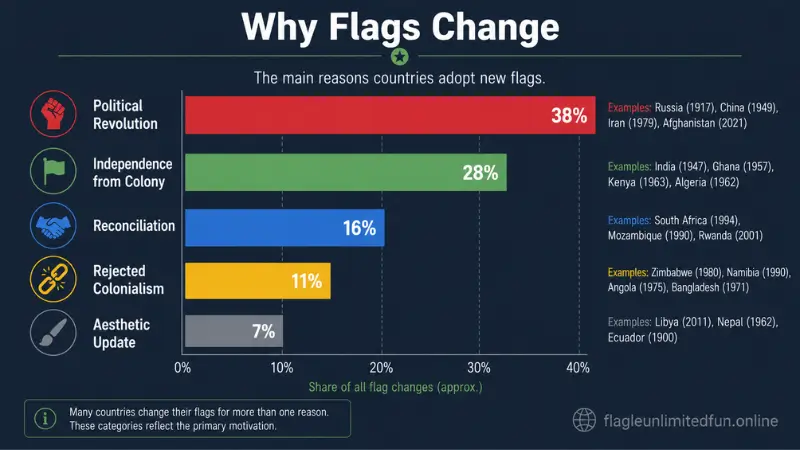
National flags are supposed to be permanent symbols of identity, but they change more often than most people realize. Sometimes a revolution sweeps away the old government and the flag along with it. Sometimes a country decides its flag sends the wrong message. Sometimes two countries discover their flags look identical and one of them has to change. And sometimes a nation simply grows and decides its original flag no longer represents who it has become.
This guide covers ten of the most interesting flag redesigns in history, explaining what changed, why it changed, and what the old and new designs tell us about the country at each moment in time.
How Often Do Flags Actually Change?
More often than you might expect. Of the 195 UN member states, dozens have changed their flags since 1990. Political upheaval is the most common trigger, followed by independence from colonial rule. Some countries have changed their flag more than 20 times. Afghanistan is one of the most extreme examples, having used more than 20 different flags since 1900 as different governments came to power and each replaced the national symbol.
Table of Contents
- 1. South Africa — A Flag Built for Reconciliation
- 2. Libya — From Green Simplicity to Revolution
- 3. Myanmar — A New Star for a New Era
- 4. Malawi — Changed and Changed Back
- 5. New Zealand — The Flag Debate That Divided a Nation
- 6. Georgia — Reviving a Medieval Symbol
- 7. Mozambique — The Flag That Kept Its Rifle
- 8. Rwanda — Designing Away from Genocide
- 9. Mauritania — Adding Red for the Fallen
- 10. Syria — A Flag Changed by Revolution
1. South Africa — A Flag Built for Reconciliation
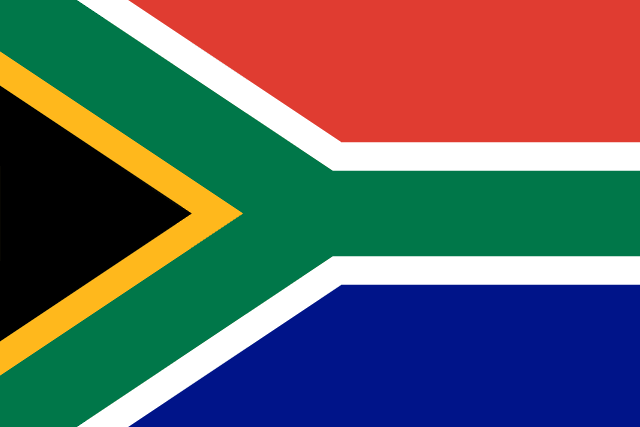 South Africa (1994)
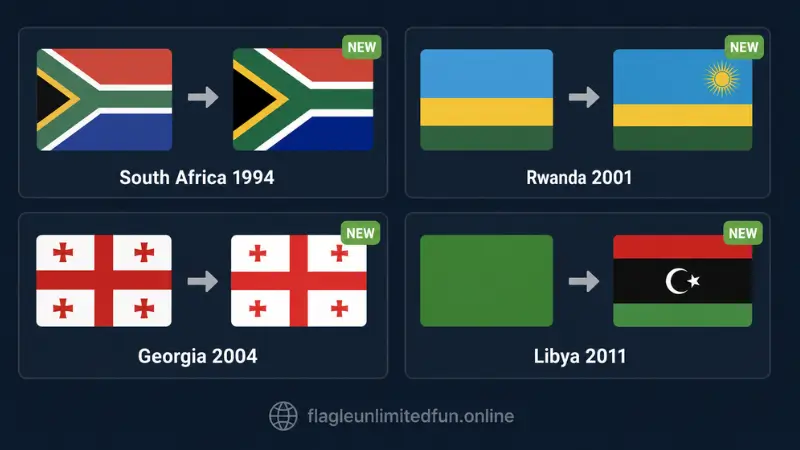
South Africa's current flag, adopted in 1994, is one of the most deliberately designed national flags in the world. The previous flag, used from 1928 to 1994, was closely associated with the apartheid government and the Afrikaner nationalist movement. When the first democratic elections brought Nelson Mandela to power, a new flag was needed that could represent all South Africans rather than a particular racial or political group.
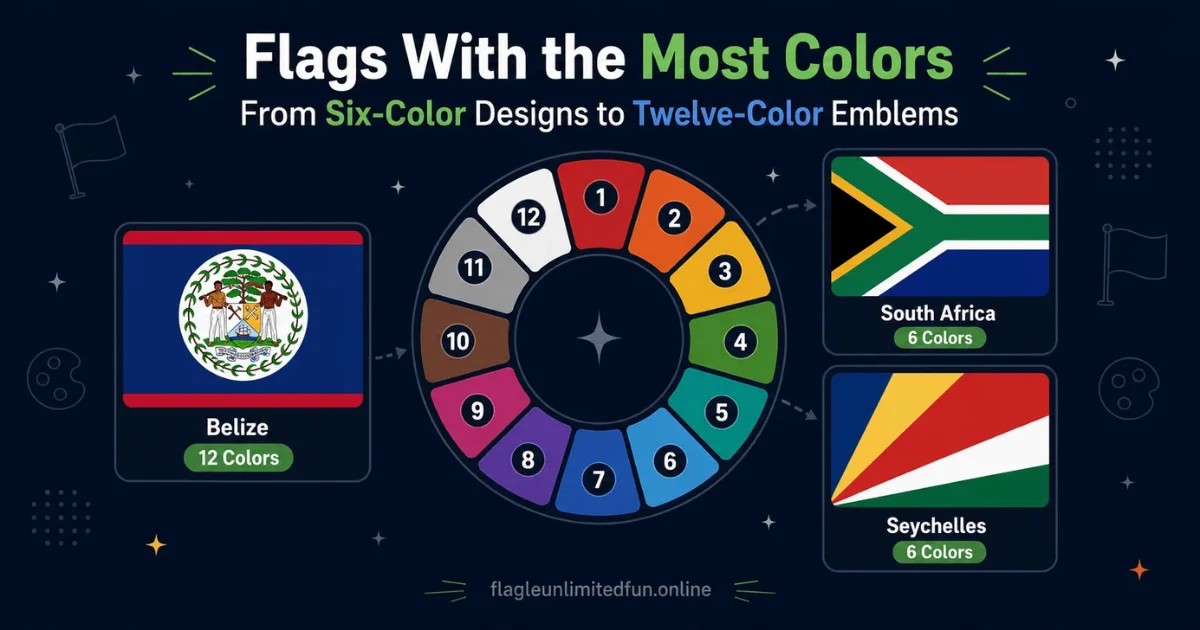
The designer, Frederick Brownell, had just weeks to create the new flag before the election. The result uses six colors: black, gold, green, white, red, and blue. A green horizontal Y-shape runs from the hoist, representing the convergence of the country's diverse elements into a unified future. The colors incorporate the black, green, and gold of the African National Congress, the red, white, and blue of the old South African flag and the Boer republics, and the green representing the land. No single color was chosen to represent any one group exclusively.
The flag was originally intended as a temporary design, to be replaced after a proper design competition. It proved so popular that it was made permanent. It is now widely cited by vexillologists as one of the best-designed national flags in the world, precisely because it solved an almost impossible political problem through design rather than compromise. For more on what makes South Africa's flag stand out, read our guide to the most unique flags in the world.
Flagle Note: South Africa's six-color Y-design is completely distinctive. Once you recognize it, you will never mistake it for another flag. The green Y-shape from the hoist is the fastest visual anchor.
2. Libya — From Green Simplicity to Revolution
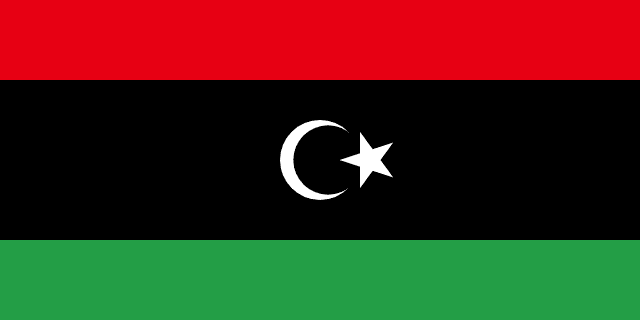 Libya (2011)
From 1977 to 2011, Libya used the world's only entirely single-color national flag: a plain solid green rectangle with nothing else on it. The green was chosen by Colonel Muammar Gaddafi to represent Islam and his Third International Theory, an ideology that claimed to offer an alternative to both capitalism and communism. The flag was as radical a design statement as any flag in history.
When the Libyan civil war toppled Gaddafi in 2011, rebels adopted the old independence flag from 1951: black, red, and green horizontal stripes with a white crescent and star at the center. The choice was deliberate. By going back to the pre-Gaddafi flag, the new government was symbolically erasing the 42-year period of his rule. The plain green flag was replaced not with something new but with something older, treating the Gaddafi era as an interruption rather than a chapter.
Libya's flag history illustrates one of the most common patterns in flag change: when a government falls, its flag often falls with it, and the replacement reaches back to a pre-revolutionary design to establish historical legitimacy.
3. Myanmar — A New Star for a New Era
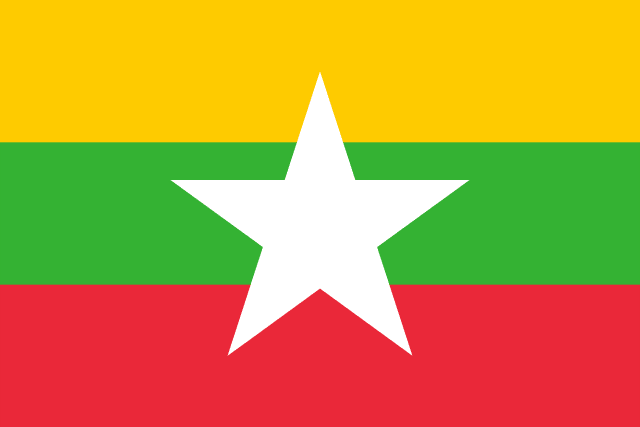 Myanmar (2010)
Myanmar changed its flag in 2010 as part of a broader rebranding that included changing the official name from Burma to Myanmar, adopting a new constitution, and transitioning from military to quasi-civilian rule. The previous flag, used since independence in 1974, featured a red field with a blue canton containing a gear wheel, paddy plant, and fourteen stars representing the country's states.
The new flag uses three horizontal stripes of yellow, green, and red, with a large white star at the center. The yellow represents solidarity and unity, the green represents peace and tranquility, and the red represents courage and decisiveness. The large white star represents the union of the country's states and divisions.
The redesign was controversial because it coincided with a military government transition that many observers saw as cosmetic rather than substantive. Flag changes that accompany political transitions often carry this ambiguity: the new symbol can represent genuine transformation or can be used to create the appearance of change without its substance.
4. Malawi — Changed and Changed Back
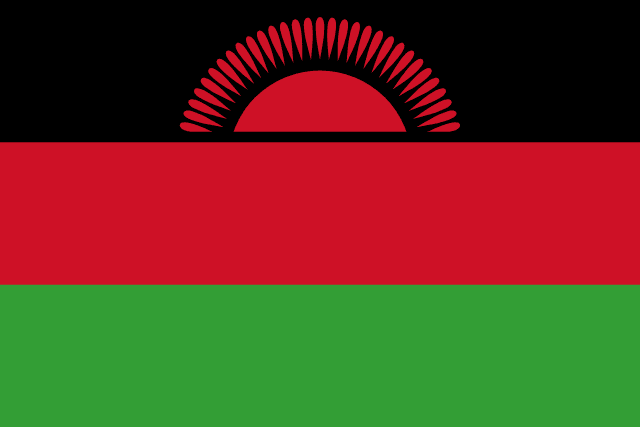 Malawi
Malawi's flag story is a lesson in the political power of national symbols. The original flag from independence in 1964 used black, red, and green horizontal stripes with a red rising sun at the top of the black stripe. In 2010, President Bingu wa Mutharika changed the flag, moving the rising sun to the center and changing it to a full white sun to represent Malawi's economic progress.
The change was widely unpopular. Critics argued it erased the original independence symbolism without sufficient reason. When Mutharika died in office in 2012 and was succeeded by Joyce Banda, one of her first acts as president was to restore the original flag. The restoration was greeted with public celebration. Malawi's flag history shows how strongly people can feel about the original version of their national symbol, and how quickly a change can be reversed when the political will that created it disappears.
5. New Zealand — The Flag Debate That Divided a Nation
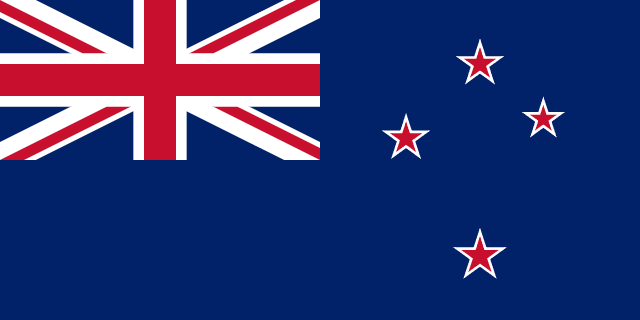 New Zealand (current)
New Zealand held a two-stage referendum in 2015 and 2016 to decide whether to replace its flag. The current flag, a blue field with the Union Jack in the upper left and the Southern Cross on the right, has been in use since 1902. Critics argued it was too similar to Australia's flag, that the Union Jack was an outdated colonial symbol, and that the flag did not reflect New Zealand's independent identity or its Maori heritage.
The first referendum selected a new design from five finalists: a black, white, and blue flag featuring a silver fern, the most widely recognized symbol of New Zealand. The second referendum asked voters to choose between the current flag and the new design. The current flag won 57% to 43%.
The New Zealand debate raised every question that flag redesigns always raise: what is a flag actually for? Is it a practical identifier or a historical document? Who has the right to decide what a nation's symbol should look like? These questions have no universal answers, which is why flag redesign referendums are rare and why most countries avoid them. The fact that 43% of New Zealanders voted for a change suggests the debate is not permanently closed.
6. Georgia — Reviving a Medieval Symbol
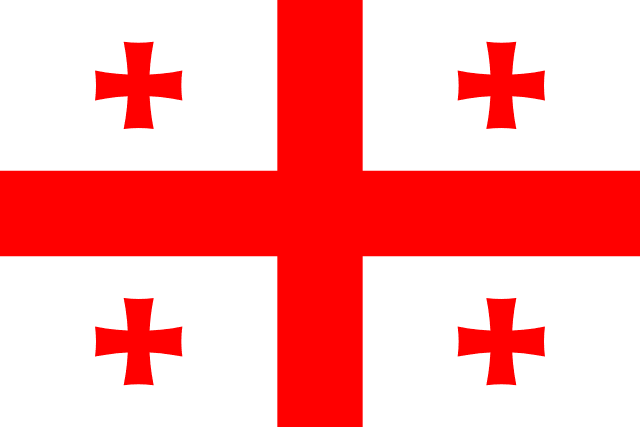 Georgia (2004)
Georgia adopted its current flag in 2004 after the Rose Revolution brought Mikheil Saakashvili to power. The previous flag had been the simple red and black banner used since the early 1990s following independence from the Soviet Union. The new design revived a flag used by the medieval Kingdom of Georgia: a white field with a large red cross dividing it into four quadrants, each containing a smaller red cross.
The Five Cross Flag, as it is known, dates to at least the 14th century and was associated with the Georgian Orthodox Church and the nation's Christian identity. By adopting it, the new government was making several statements simultaneously: a break from the post-Soviet era, a connection to Georgia's pre-Soviet and pre-Russian medieval past, and an alignment with European Christian identity at a time when Georgia was seeking closer ties with the European Union and NATO.
Georgia's case illustrates a common pattern in post-communist flag redesigns. Countries that regained independence from the Soviet Union frequently reached back before the Soviet period for their national symbols, treating the Soviet era as an interruption of their real national history.
7. Mozambique — The Flag That Kept Its Rifle
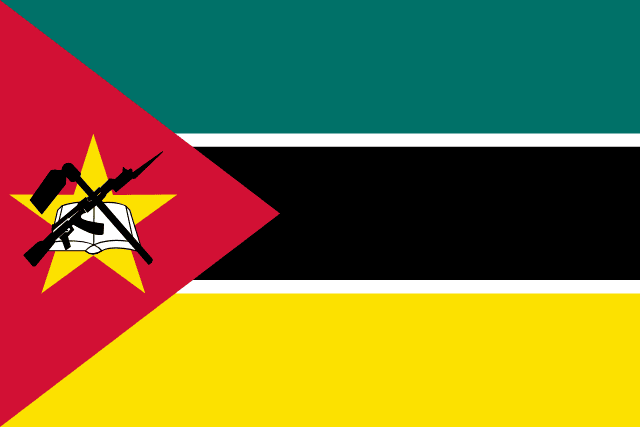 Mozambique
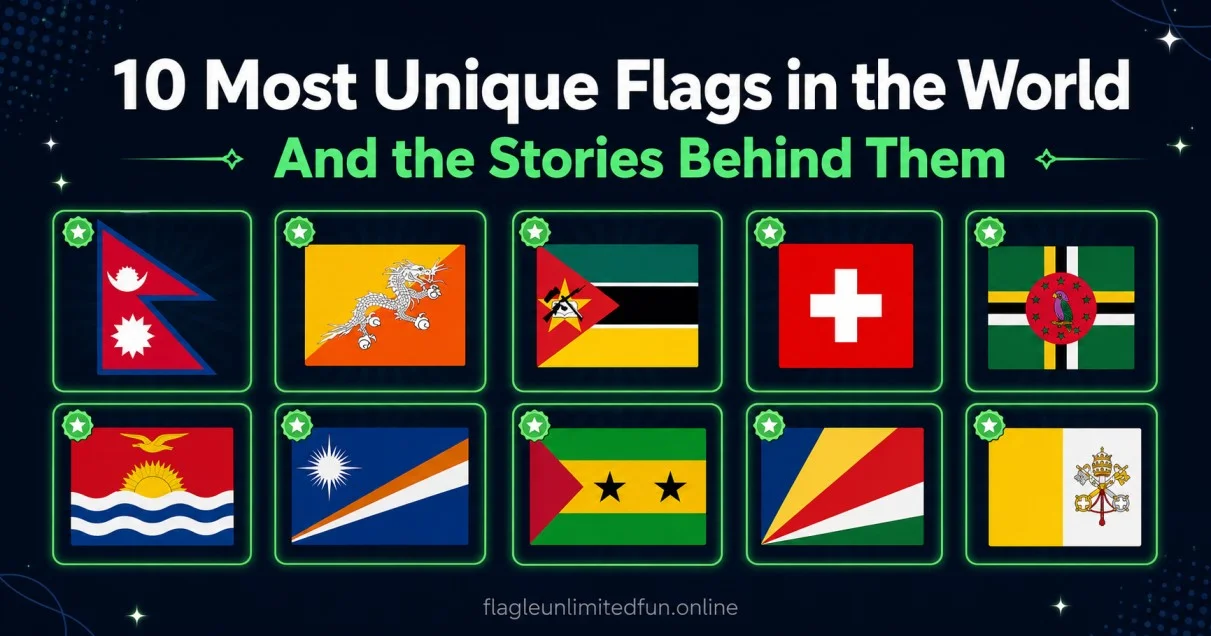
In 2005, Mozambique held a competition to redesign its flag and remove the AK-47. The winning design was selected, praised by designers, and then rejected by the government. The original flag, with its rifle, hoe, and book in a red triangle at the hoist, was kept.
The decision to keep the AK-47 was a statement about national memory and identity. The Frelimo party, which led Mozambique's independence struggle and has governed ever since, viewed the rifle not as a symbol of violence but as a symbol of the specific historical moment when Mozambicans fought for and won their freedom. Removing it, in the government's view, would be erasing that history.
The Mozambique case is one of the clearest examples of a flag redesign that was seriously considered and consciously rejected. Not every flag that attracts redesign pressure actually changes. Sometimes the pressure itself generates a reaffirmation of the original design. The AK-47 stays precisely because there was a serious movement to remove it. For more on what makes Mozambique's flag unique, read our most unique flags guide.
8. Rwanda — Designing Away from Genocide
 Rwanda (2001)
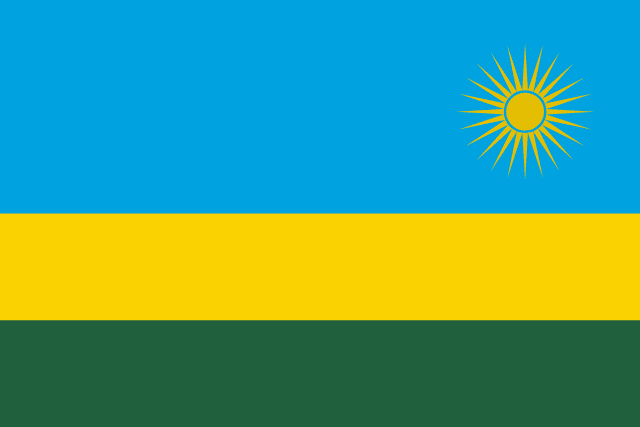
Rwanda changed its flag in 2001, seven years after the 1994 genocide in which approximately 800,000 people were killed in 100 days. The original flag used green, yellow, and red horizontal stripes with a large black letter R in the center to distinguish it from Guinea's identical flag. Both the colors and the R had been used by the pre-genocide government, and the flag was associated in many survivors' minds with the violence.
The new flag uses blue, yellow, and green horizontal stripes with a yellow sun in the upper right corner. Blue represents happiness and peace. Yellow represents economic development. Green represents the hope of prosperity. The sun represents unity and transparency. The design was created by local artist Alphonse Kirimobenecyo.
Rwanda's flag change is one of the most psychologically significant in recent history. The government did not just change a symbol; it changed the visual language associated with national identity, making it impossible to see the new flag and remember only the genocide. The redesign was part of a broader national effort to rebuild Rwandan identity on a foundation that could survive and transcend the country's darkest chapter.
9. Mauritania — Adding Red for the Fallen
 Mauritania (2017)
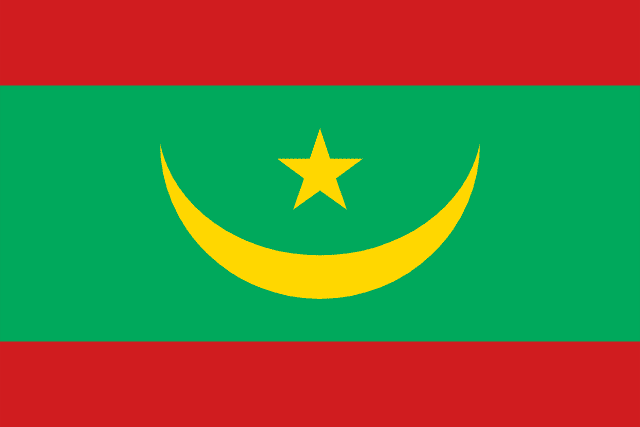
Mauritania made a small but significant change to its flag in 2017. The original design, in use since 1959, used a green field with a gold crescent moon and star. In 2017, two red horizontal stripes were added at the top and bottom of the flag following a constitutional referendum.
The red stripes represent the blood of those who would defend the country against its enemies. The addition was specifically framed as a tribute to those who died defending Mauritanian sovereignty, and it was approved as part of a package of constitutional changes under President Mohamed Ould Abdel Aziz.
Mauritania's change is an example of additive redesign: the core of the flag was kept intact, and new elements were added to extend its meaning rather than replace it. This is one of the least disruptive ways to update a national flag, because it preserves continuity while incorporating new symbolism.
10. Syria — A Flag Changed by Revolution
 Syria
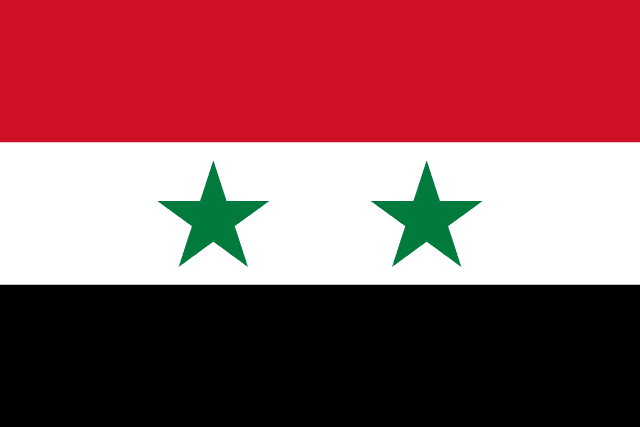
SyriaIn December 2024, Syria changed its flag following the fall of President Bashar al-Assad's government. The previous official flag used red, white, and black horizontal stripes with two green stars, a design associated with the Baathist government that had ruled Syria for decades. When Assad fled the country, rebels adopted what they called the Independence Flag, a green, white, and black horizontal tricolor with three red stars, which had been used as the flag of the Syrian opposition and traces back to the French Mandate period and Syria's first independence era.
The change was immediate and visible: rebel forces pulled down Assad-era flags and replaced them with the independence design within hours of taking control of Damascus. As of 2025, the independence flag is in use by the transitional government, though the final constitutional status of the new design is still being determined.
Syria's flag change is one of the most recent examples in this guide, and it follows the same pattern as Libya's 2011 change: a government falls, and the replacement reaches back to a pre-authoritarian design to establish historical legitimacy over the ousted regime.
What Flag Changes Tell Us
Looking across these ten cases, several patterns emerge. Political revolution is by far the most common trigger for flag change. When a government falls, its flag often falls with it. The replacement almost always reaches back to an earlier design, treating the overthrown government as a historical interruption rather than a legitimate chapter.
Reconciliation is the second major driver. South Africa and Rwanda are the clearest examples: countries that needed new symbols because the old ones were inseparable from the violence and injustice they were trying to move past. In both cases, the redesign was part of a broader national rebuilding effort rather than just an aesthetic choice.
And sometimes flags simply do not change despite significant pressure, as Mozambique and New Zealand demonstrate. A flag has value precisely because it is permanent and shared. The moment it changes, it must justify that change against the weight of everything the old design meant to everyone who grew up with it. That is a high bar, and many proposed changes fail to clear it.
Understanding why flags change makes them more interesting objects rather than just static symbols. For more on flag design and what symbols mean, read our guides on what flag colors actually mean and why so many flags look similar.