Most players hit a plateau in Flagle Unlimited after a few weeks. They get comfortable guessing by flag recognition alone, and then they run into a flag they have never seen and burn through five attempts before finally getting it right. If that sounds familiar, this guide is for you.
Getting genuinely good at Flagle requires two separate skill sets: visual recognition and geographic reasoning. Most players develop one and neglect the other. This guide covers both, along with the specific habits that separate players who average two or three attempts from those who regularly need five or six.
What "Better" Actually Means in Flagle
The goal is not just to win every game. It is to win in fewer attempts, more consistently, across a wider range of flags including the ones from countries you rarely think about. A player who wins every game in three attempts is significantly stronger than one who sometimes gets it in one but regularly needs six.
Table of Contents
- Understand What the Game Is Actually Testing
- Build Your Visual Recognition
- Develop Geographic Reasoning
- Master the Distance Indicator
- Daily Habits That Actually Help
- Common Mistakes and How to Fix Them
- Track Your Progress
- The One Thing That Matters Most
Understand What the Game Is Actually Testing
Flagle Unlimited is not purely a memory game. It tests three things simultaneously: your ability to recognize visual patterns in flags, your knowledge of world geography, and your ability to reason under limited information. Players who only focus on memorizing flags miss the other two components entirely.
The Three Skills You Need
Visual recognition gets you the easy wins, the flags you have seen before and can name immediately. Geographic reasoning gets you through the hard ones, the flags you have never seen or cannot quite place. The ability to reason from partial information, using the distance and direction clues intelligently, is what separates good players from great ones.
Why Smart Players Beat Knowledgeable Players
Someone with deep knowledge of flags will win most games easily but occasionally get stuck on an obscure country and use all six attempts. Someone with strong geographic reasoning will consistently finish in three or four attempts even on unfamiliar flags, because they use each guess to extract maximum information. Over hundreds of games, the strategic player will have a better average score.
Build Your Visual Recognition
Flag recognition is a skill you can build deliberately. Random exposure through playing helps, but it is slow. Deliberate study is much faster.
Start With Anchor Flags
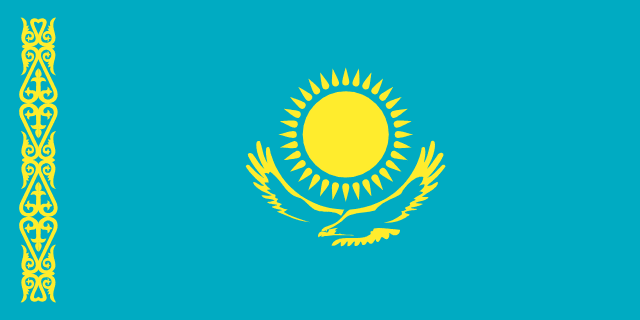
Anchor flags are the ones that are completely unique and have no visual equivalent anywhere in the world. Learn these first because they are the easiest to lock in and they give you immediate wins. The best anchors are Nepal (only non-rectangular flag), Bhutan (only flag with a dragon), Switzerland (square flag with white cross), Vatican City (only flag with keys), and Jamaica (only flag with a black X). Once you know these five, you will never mistake them for anything else.
Learn Flags in Regional Groups
Flags from the same region often share colors, symbols, or design elements. Learning them as a group is faster than learning them individually because the differences become obvious when you see them side by side. Study the Nordic cross flags together (Norway, Sweden, Denmark, Finland, Iceland), the Pan-Arab color flags together (Iraq, Jordan, UAE, Kuwait), and the tricolor flags together. Our Asian flags guide walks through this grouping approach for one of the hardest regions.
Focus on What Makes Each Flag Unique
When you study a flag, do not just memorize the colors. Ask yourself what is the one thing about this flag that appears nowhere else. Indonesia is red over white (nearly identical to Monaco, so what else distinguishes it?). Chad and Romania are almost identical vertical tricolors. Knowing the distinguishing detail is what actually helps you in the game, not just knowing the colors.
The Hardest Flags to Learn
Some flags are hard because they look like other flags. Some are hard because they are rarely seen. Some are hard because their symbols are complex and unfamiliar. Our guide to the hardest flags to identify covers the specific ones that trip most players up, along with exactly why each one is difficult and how to finally lock it in.
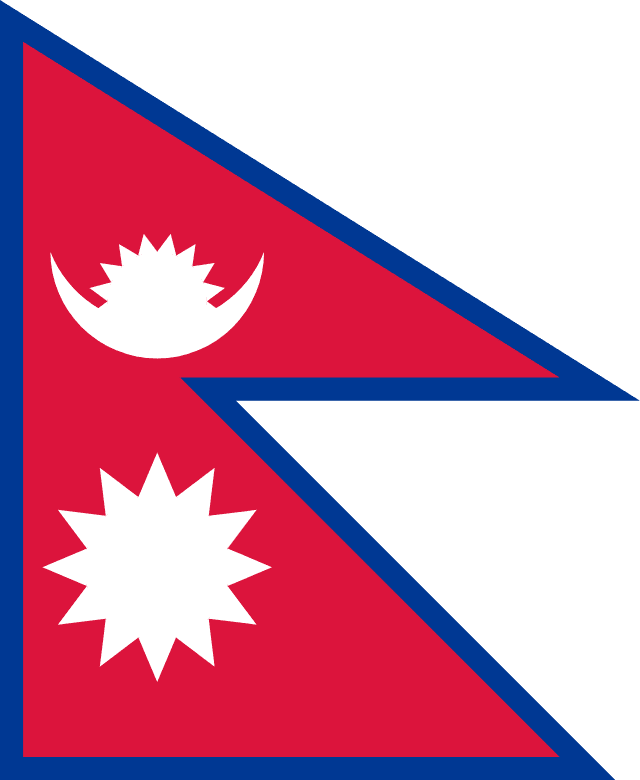 Nepal
Nepal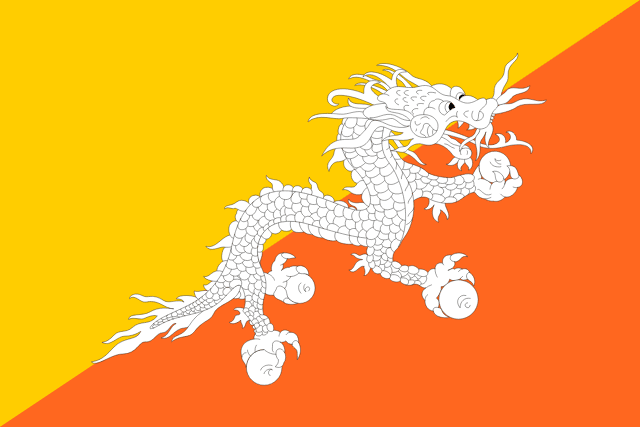 Bhutan
 Switzerland
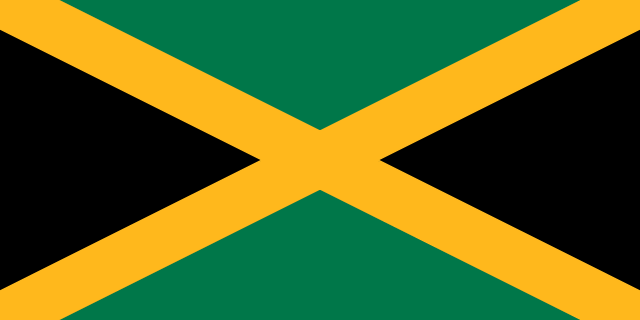 Jamaica
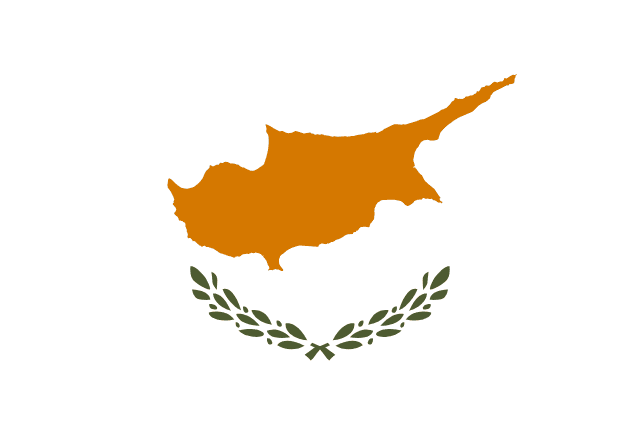 Cyprus
 Kazakhstan
Develop Geographic Reasoning
Geographic reasoning is the ability to use distance and direction clues to narrow down where a country is, even if you cannot identify the flag visually. This is the skill that most players neglect, and it is where the biggest gains are available.
Know Your Continents Cold
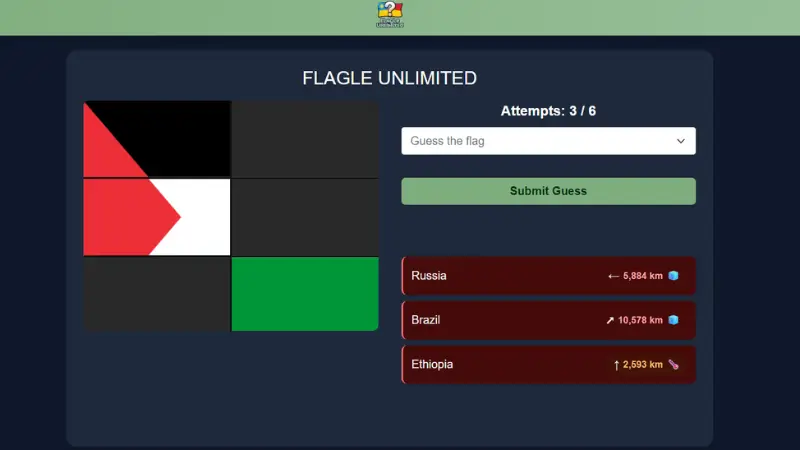
You need to be able to look at a distance and direction from a known country and immediately know which continent or sub-region you are pointing at. This is not about memorizing capital cities. It is about having a rough mental map of where continents and major countries sit relative to each other. If you guess Russia and get 9,000 km pointing southwest, you should immediately think South America or Southern Africa, not just "far away."
Use Strategic Starting Countries
Your first guess should almost never be a guess at the correct flag. It should be a geographic probe. Choose a country that sits at a crossroads and will give you maximum information regardless of where the answer is. Russia, Sudan, Brazil, and Turkey are consistently the best openers for this reason. Our detailed guide on best starting countries in Flagle covers this in depth.
Think in Elimination, Not Confirmation
Most players make guesses trying to confirm what they think the answer is. Strong players make guesses designed to eliminate possibilities. If you are fairly sure the answer is somewhere in East Asia, do not guess China hoping to get lucky. Guess a country that, based on its position, will tell you whether the answer is in East Asia, Southeast Asia, or Central Asia. Use the information to eliminate, not to confirm.
Master the Distance Indicator
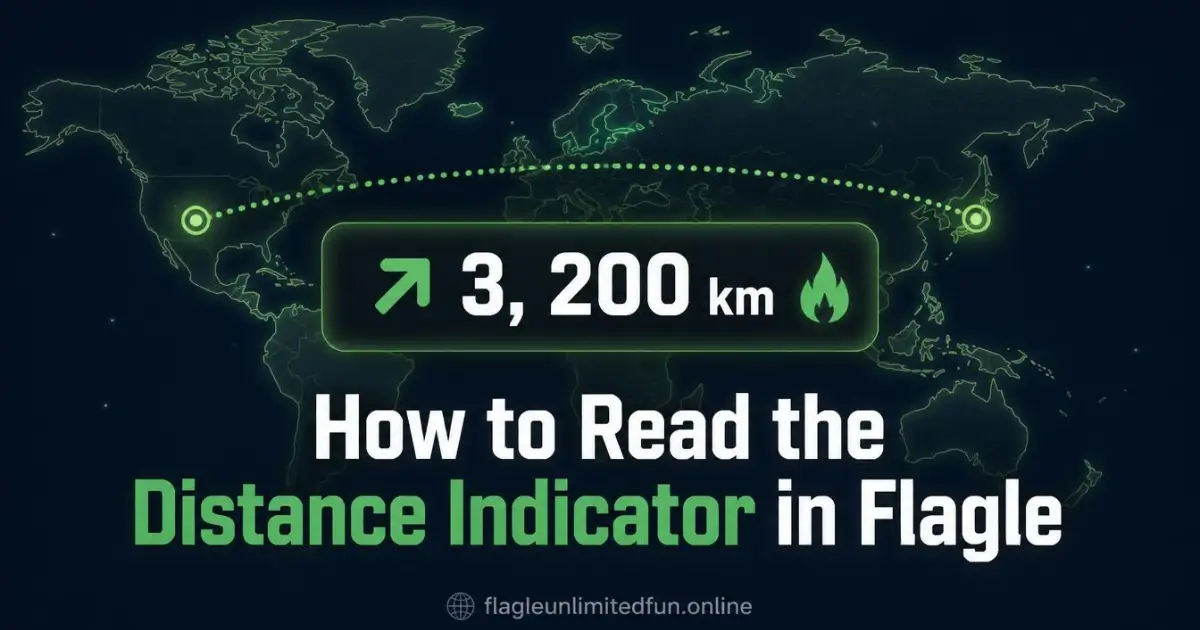
The distance indicator is the most underused tool in Flagle Unlimited. Most players glance at the number and the arrow and move on. Strong players extract every bit of information from it. For a full breakdown of how the indicator works, read our complete distance indicator guide.
Learn the Distance Brackets
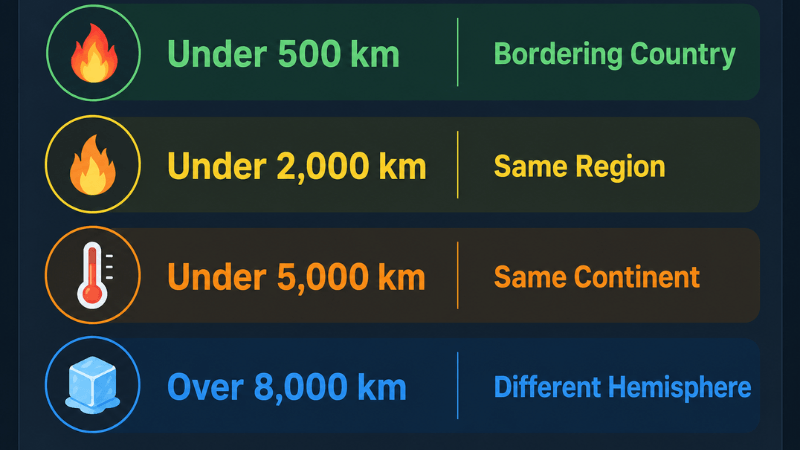
Train yourself to think in rough distance brackets rather than exact numbers. Any distance under 500 km means you are in the immediate neighborhood, likely the same sub-region. Under 2,000 km means the same broad region. Under 5,000 km means the same hemisphere or at least a connected landmass. Over 8,000 km means you are on the opposite side of the world. These brackets let you quickly categorize each guess result without needing to calculate anything.
Read the Arrow Precisely
The arrow points in the exact direction of the correct country from your guess. Most players read it as one of eight directions (north, northeast, east, etc.). Train yourself to be more precise. An arrow pointing slightly west of north means something different from one pointing slightly east of north. The more precisely you read the arrow, the smaller the area you are triangulating toward.
Combine Distance and Direction
Distance alone tells you how far. Direction alone tells you which way. Together, they give you a specific arc on the map. After your first guess, you should be able to draw a rough circle around a region. After your second guess, the two circles should intersect, giving you a much smaller zone. By your third guess, you should know the continent and often the specific part of it.
Daily Habits That Actually Help
Improvement in Flagle comes from consistent exposure over time, not from single long study sessions. Small daily habits compound into significant skill gains.
Play Every Day
The single most effective habit is playing at least one game every day. Daily repetition builds the pattern recognition that makes flags feel familiar. The Daily Challenge is perfect for this because it gives you one game that is the same for all players worldwide, which lets you compare your result against others.
Review Your Wrong Guesses
After each game, spend thirty seconds looking at the flags you guessed incorrectly. Do not just note that you were wrong. Ask yourself specifically what visual feature of the correct flag you should have recognized, or what geographic reasoning would have gotten you there faster. This deliberate review turns each mistake into a specific lesson.
Study One Region Per Week
Pick one region of the world each week and spend five minutes looking at all the flags from that region. Not memorizing, just looking. The goal is exposure and familiarity. After a few weeks covering Africa, Southeast Asia, the Caribbean, and Central America, you will find that these regions feel less opaque when they come up in games.
Use a Mental Flag Index
When you encounter a flag you do not know, build a mental index entry for it: dominant color, main symbol, region. "Turkmenistan: green, carpet pattern stripe, Central Asia." This three-part structure is enough to recall the flag quickly in future games without having to memorize every detail of its design.
The 30-Day Challenge
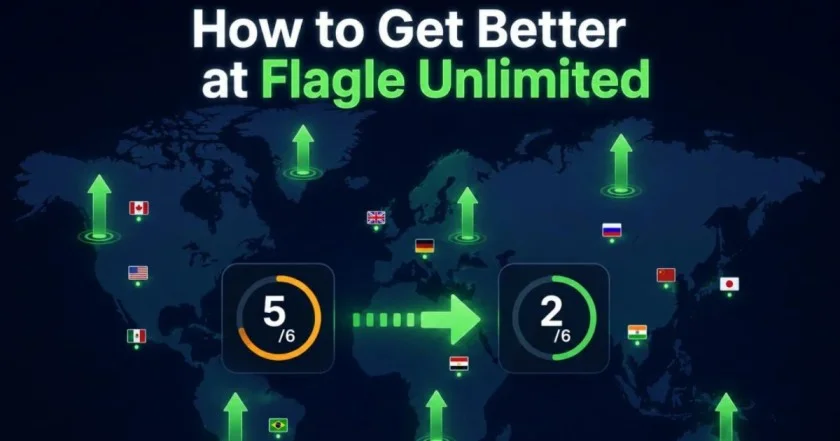
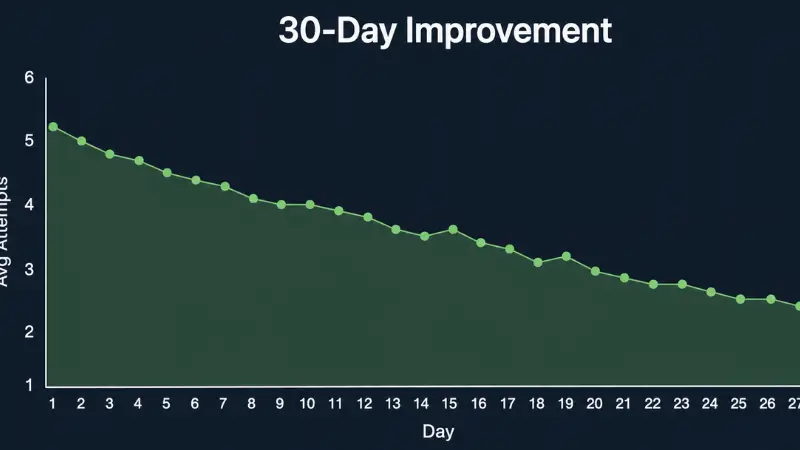
Play Flagle Unlimited every day for 30 days. After each game, write down one flag you did not know and look it up. After 30 days, you will have deliberately studied 30 flags you were previously unsure of, and your daily game repetition will have reinforced hundreds more. Most players who do this see their average score drop by one full attempt within the first two weeks.
Common Mistakes and How to Fix Them
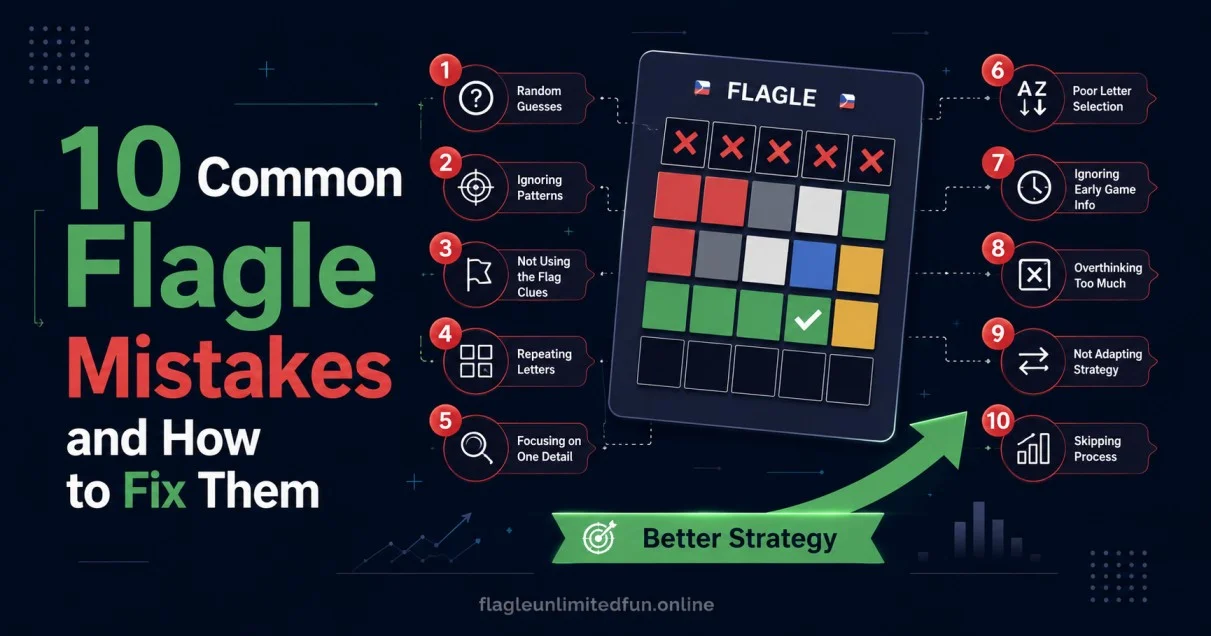
Guessing Randomly When Stuck
When players do not recognize a flag, many start guessing random countries hoping to get lucky. This is the single biggest waste of attempts in the game. Instead of guessing randomly, use your remaining attempts as geographic probes. Even if you have no idea what the flag is, a strategic guess from a well-positioned country gives you distance and direction information that narrows things down significantly.
Ignoring the Arrow
Many players focus entirely on the distance number and barely look at the arrow. The arrow is often more valuable than the distance. Knowing that the correct country is northeast of your guess is more actionable than knowing it is 3,000 km away in an unspecified direction.
Starting With Small or Remote Countries
Starting with Luxembourg, Singapore, or New Zealand gives you a distance clue that is almost useless because these countries are too small or too remote to anchor a useful geographic search. Always start with a large, centrally positioned country as your first guess unless you are very confident you know the answer.
Treating Every Game as a Flag Recognition Test
The best players treat Flagle as a geography deduction game that happens to involve flags, not a flag recognition test. The distinction matters because it changes how you approach each guess. When you treat it as deduction, you think strategically about information extraction. When you treat it as recognition, you are just hoping your memory is good enough.
Track Your Progress
Improvement is easier to sustain when you can see it. The leaderboard on Flagle Unlimited tracks your total wins, win rate, current streak, and average attempts. Check the leaderboard regularly and use your own stats as a baseline.
The Metrics That Matter
Win rate tells you how often you succeed. Average attempts tells you how efficiently you succeed. Both matter, but average attempts is the better measure of skill because it captures how quickly you solve each puzzle, not just whether you solve it. A win rate of 90 percent with an average of 4.5 attempts is weaker than a win rate of 85 percent with an average of 2.8 attempts.
Set a Specific Goal
Rather than vaguely trying to "get better," set a specific target. If your average is currently 4.2 attempts, aim to bring it to 3.5 within 30 days. Specific targets make it easier to evaluate whether your practice habits are actually working.
The One Thing That Matters Most
If you take one thing from this guide, make it this: stop playing Flagle as a memory test and start playing it as a geography deduction game. Memory will get you through the flags you already know. Deduction will get you through every flag you have never seen before, and there are a lot of them.
The players who improve fastest are not the ones who study flags the hardest. They are the ones who learn to extract the most information from each guess, think geographically rather than visually, and approach each unknown flag as a puzzle to be solved rather than a memory to be retrieved.
Play the Daily Challenge every day, review your mistakes, and apply the strategic principles from this guide and our best starting countries guide. Within a month, you will not recognize yourself in the stats.