Most flag design experts agree that the ideal national flag uses no more than three colors. The North American Vexillological Association lists simplicity as its first principle of good flag design, and color restraint is central to that. Bold, distinct colors visible from a distance reproduce well on fabric, print clearly on paper, and remain recognizable at any size.
And yet some countries looked at those principles and built something completely different. Flags with six colors. Flags where the coat of arms alone contains a dozen distinct hues. Flags with radiating bands of five colors, diagonal designs with intricate patterns, and central emblems detailed enough to require a magnifying glass at standard flag size.
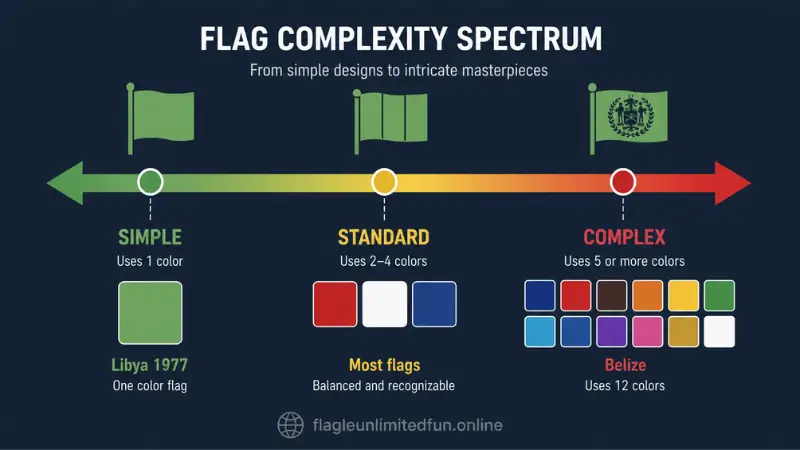
This guide covers the world's most colorful flags, explains why they use so many colors, and examines what that complexity tells us about the countries behind them. It also covers the other end of the spectrum: the few flags that use only a single color, and what that minimalism means.
What Counts as a Color?
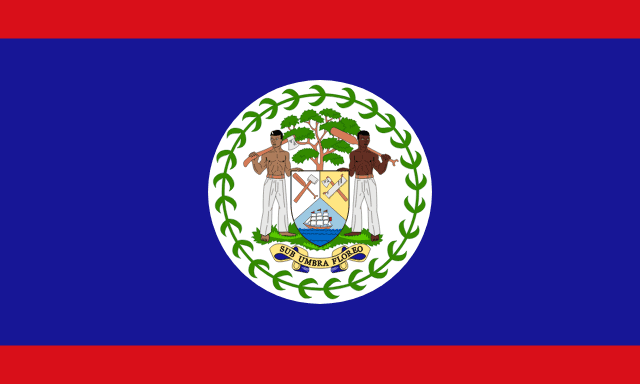
Counting flag colors sounds simple but gets complicated quickly. Does a coat of arms count? Does a shade variation within one color count as a separate color? Vexillologists generally count the main field colors separately from emblem colors, but when comparing the most colorful flags, the emblem colors are where the real numbers accumulate. Belize's flag field uses only blue and red, but its coat of arms contains at least twelve distinct colors including flesh tones, multiple shades of green, brown, and gold. Whether you count the field only or the entire flag changes the rankings significantly.
Table of Contents
- Why Most Flags Use Only Two or Three Colors
- The Most Colorful National Flags
- Flags Where the Emblem Carries the Color
- The Other Extreme: Single-Color Flags
- Does Color Count Actually Matter for Flag Recognition?
- How Color Complexity Affects Flagle Gameplay
Why Most Flags Use Only Two or Three Colors
The dominance of simple color schemes in flag design is not accidental. It reflects centuries of practical experience with what actually works when a piece of fabric needs to communicate identity across a distance, in all weather conditions, at any time of day.
Red appears on approximately 77 percent of all national flags, making it by far the most common flag color in the world. Blue, white, and green follow at high frequencies. Yellow and black appear less often. Purple is the rarest of all, appearing on virtually no national flag as a main field color, largely because purple dye was historically so expensive that flags using it were impractical to produce at scale. By the time synthetic purple dyes became affordable, most national flags were already established.
The two-or-three-color standard exists because it works. Simple color combinations are easier to reproduce in fabric manufacturing, easier to print at small sizes, easier to recognize from a moving vehicle or at the top of a distant flagpole, and easier for citizens to draw, describe, and remember. A flag that requires twelve colors to reproduce accurately is a flag that will be reproduced inconsistently, look different across contexts, and fail to function as a reliable identifier. For a deeper look at what individual colors mean on flags, read our guide on what flag colors actually mean.
The Most Colorful National Flags
Belize — The Most Colors of Any National Flag
 Belize
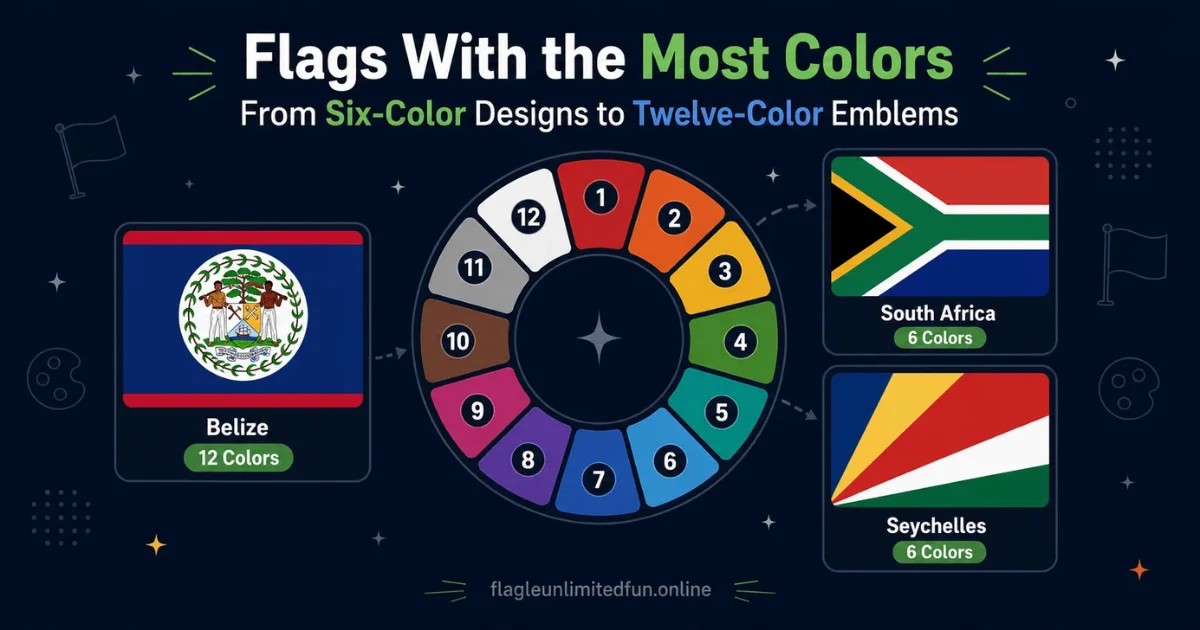
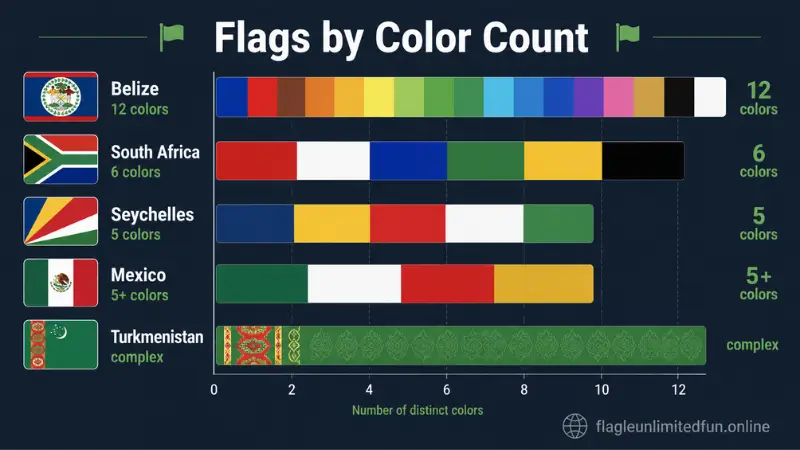
Belize holds the distinction of having the most colors of any national flag in the world, with approximately twelve distinct colors when the coat of arms is counted in full. The flag's main field is blue and red, making it look relatively simple from a distance. Up close, the central white circle contains a coat of arms with two human figures, a mahogany tree, a shield with multiple heraldic elements, a sailing ship, tools, and a Latin motto ribbon. Each element introduces additional colors: flesh tones for the figures, multiple shades of green for the foliage, gold and brown for the tools, and blue for the ship and water.
The complexity of Belize's coat of arms reflects British colonial heraldic tradition, which favored elaborate emblems as statements of legitimacy and history. Belize gained independence from Britain in 1981 and kept the coat of arms, which had been in use since 1967. The two human figures represent the mestizo and Creole communities that built the country's mahogany logging industry. Every color in the coat of arms refers to a specific element of the composition rather than carrying independent symbolic meaning, which is a key difference between emblem-based color complexity and field-based color complexity. For more on Belize's flag, see our most unique flags guide.
South Africa — The Most Colors Without a Coat of Arms
 South Africa
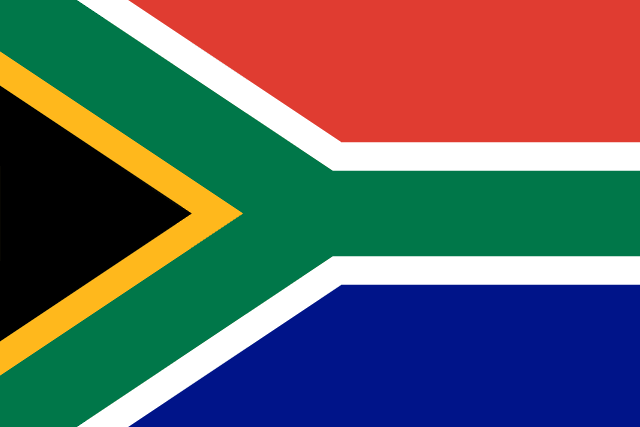
South Africa's flag is the most colorful major national flag that does not rely on a coat of arms for its color count. Six distinct colors appear directly in the flag's geometric design: black, gold, green, white, red, and blue. No coat of arms, no emblem, no hidden details. Just six colors arranged in a Y-shape and horizontal stripes that together form one of the most visually distinctive national flags in the world.
The six colors were chosen deliberately to incorporate the colors of all major political movements in South Africa without privileging any single one. Black, green, and gold represent the African National Congress. Red, white, and blue appear in both the old South African flag and the flags of the Boer republics. Green is also shared. The flag was designed in 1994 by Frederick Brownell under significant time pressure, with the first democratic election approaching rapidly. The fact that it used six colors was controversial at the time, because it violated the standard vexillological recommendation against more than three. It turned out to work anyway, because the colors are arranged in bold, clear geometric shapes rather than scattered across a complex emblem. Read the full story in our guide on flags that changed their design.
Seychelles — Five Colors Radiating from the Hoist
 Seychelles
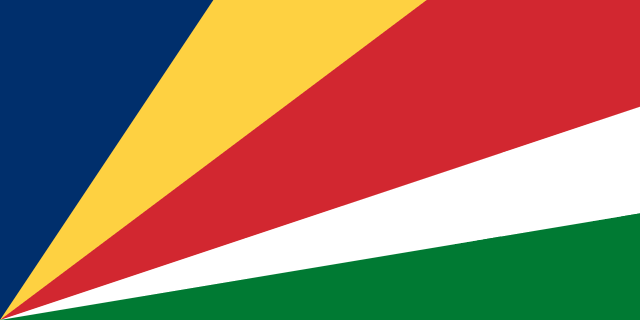
Seychelles uses five colors in an unusual radiating band design: five triangular stripes of blue, yellow, red, white, and green fan outward from the lower left corner of the flag. The design is unlike any other national flag in the world, both in structure and in the way the colors interact. No flag uses radiating diagonal bands in this way.
The five colors represent the political parties that formed the coalition government at independence, with each color drawn from a different party's banner. Blue represents the sky and the Indian Ocean. Yellow represents the sun. Red represents the people and their determination to work for the future. White represents social justice and harmony. Green represents the land and its natural environment. Seychelles changed to this design in 1996 after using a simpler design since independence in 1976. The radiating bands were chosen to represent a dynamic, forward-looking nation rather than a static one.
Flags Where the Emblem Carries the Color
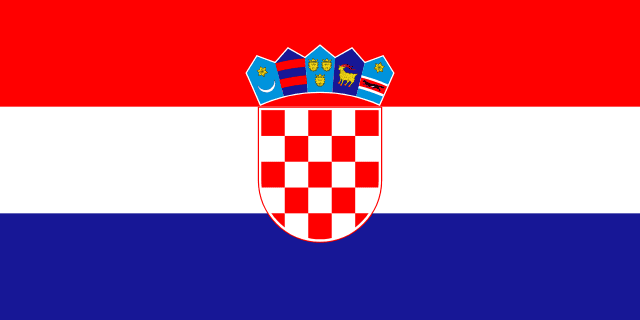
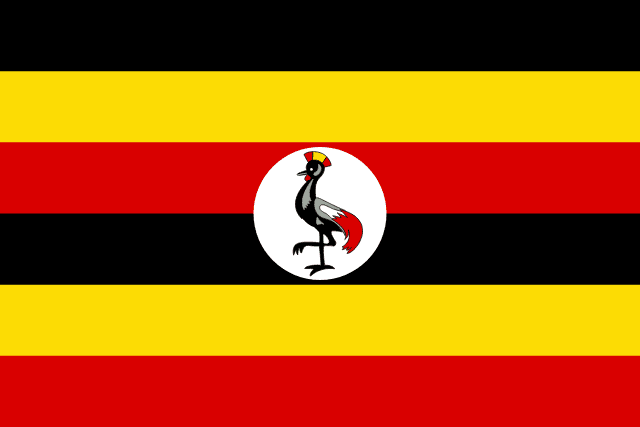
Many flags appear simple in their field colors but become highly complex when the central emblem is examined. These flags look straightforward from a distance but reveal extraordinary detail up close.
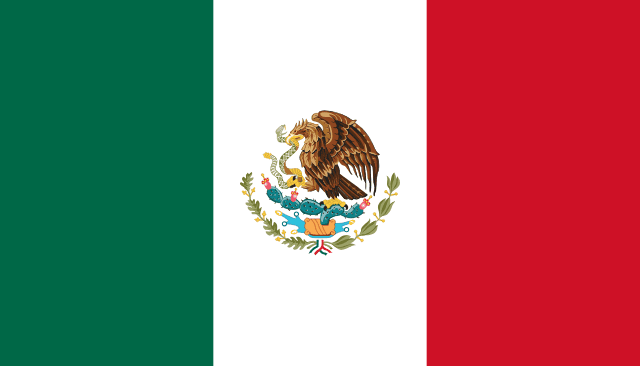 Mexico
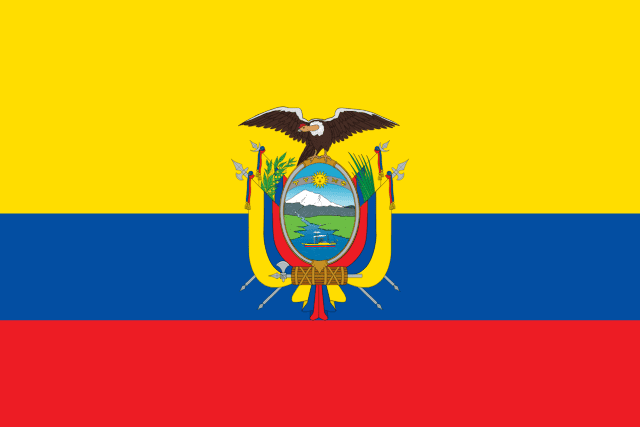 Ecuador
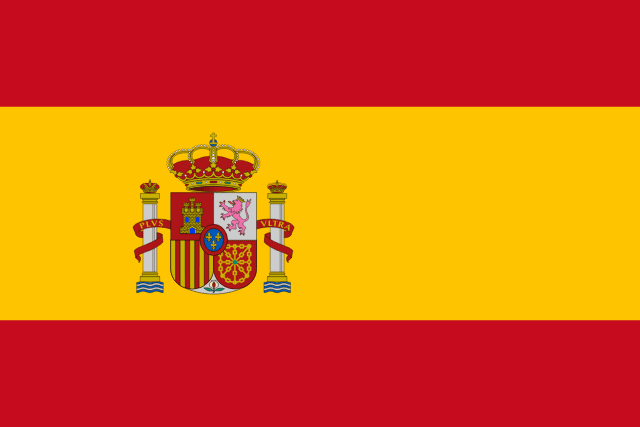 Spain
Spain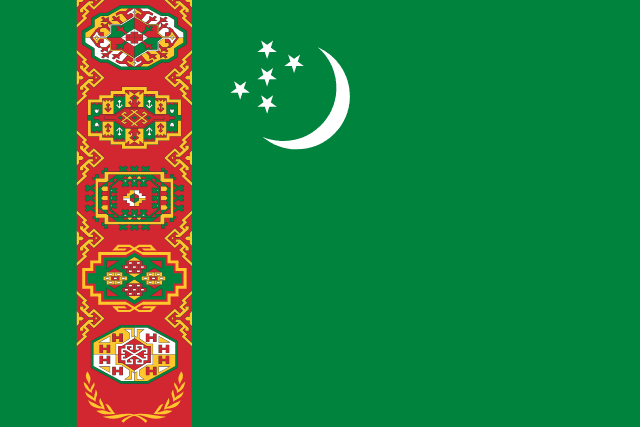 Turkmenistan
 Croatia
 Uganda
Mexico uses a green, white, and red vertical tricolor in its field, but the central coat of arms shows an eagle on a cactus devouring a snake above a wreath of laurel and oak. The emblem introduces brown, gold, multiple shades of green, and blue for the lake below the scene. Ecuador uses yellow, blue, and red horizontal stripes but places a detailed coat of arms at the center showing a condor above a mountain landscape, a river, a ship, and Aries and Taurus zodiac symbols in a detailed scene. Spain's coat of arms contains the heraldic symbols of five historic kingdoms: a castle for Castile, a lion for León, red and gold stripes for Aragon, golden chains for Navarre, and a pomegranate for Granada, all surrounded by columns and a crown.
Turkmenistan deserves special mention. Its carpet pattern stripe contains five distinct carpet guls, each a different intricate geometric design in multiple colors. Vexillologists widely consider Turkmenistan's flag the most complex national flag in the world when pattern complexity is measured rather than just color count. The carpet guls alone introduce dozens of distinct visual elements. Read more about what makes Turkmenistan's flag so unusual in our hardest flags guide and our most unique flags guide.
The Other Extreme: Single-Color Flags
At the opposite end of the spectrum, a small number of flags have used just one color, which is the most radical design statement possible in vexillology.
From 1977 to 2011, Libya used the world's only entirely single-color national flag: a plain solid green rectangle with no emblem, text, or other design element. The green was chosen by Colonel Muammar Gaddafi to represent Islam and his political ideology. It is the only national flag in modern history to consist of a single flat color with nothing else. When Gaddafi's government fell in 2011, the flag was immediately replaced. The plain green flag lasted 34 years, making it one of the longest-used single-color flags in modern history.
Afghanistan's current flag is among the simplest in use today. The Taliban government that took power in 2021 uses a white flag with the Shahada in black text, which is technically a two-element flag but uses only two tones. Before this, Afghanistan had used a black, red, and green tricolor, one of the most frequently changed flags in world history. For the story of that change, see our article on flags that changed their design.
Does Color Count Actually Matter for Flag Recognition?
More colors do not necessarily make a flag harder or easier to identify. What matters is how the colors are used rather than how many there are.
South Africa's six-color flag is actually one of the easiest to identify in the world, because those six colors are arranged in a distinctive geometric Y-shape that is immediately recognizable at any size. The color complexity serves the design rather than obscuring it. Seychelles' five radiating bands are similarly distinctive: once you have seen the radiating pattern, you will not mistake it for any other flag.
Where color complexity creates genuine identification difficulty is in flags like Belize, where most of the colors are concentrated in a small coat of arms that is nearly illegible at standard flag sizes. Players who encounter Belize in Flagle often see a blue flag with something circular and detailed in the center, and cannot read the specific content. In this case, the color complexity actively interferes with identification because it is packed into too small a space.
The flags that are genuinely hardest to identify because of their complexity are discussed in detail in our complete guide to the hardest flags. Most of the difficult cases are not difficult because of color count but because of pattern complexity, regional similarity, or limited cultural exposure.
How Color Complexity Affects Flagle Gameplay
When you are playing Flagle and the puzzle tiles begin to reveal, color is the first information you receive. Even a single revealed tile often gives you a dominant color, and that color immediately tells you something about where in the world you are looking.
For flags with distinctive multi-color designs like South Africa or Seychelles, partial reveals are actually helpful. A glimpse of the radiating green-yellow-red-white-blue pattern of Seychelles is unmistakable. A glimpse of South Africa's Y-shape is instantly recognizable even in a single tile. Colorful flags with unique geometric arrangements are often easier to identify from partial reveals than simpler flags.
For flags with color complexity concentrated in small emblems, the situation is reversed. A blue field with something circular and complex could be Belize, but it could also be several other flags. The emblem colors do not help until you can read the emblem. In these cases, your best approach is to use the distance indicator to establish geographic context and then narrow the candidates by emblem type rather than color count.
The most colorful flags in the world are not necessarily the hardest to identify. Color complexity and identification difficulty are related but separate properties. Understanding both helps you become a more complete flag player. For the broader strategy that brings all of these elements together, read our complete improvement guide and practice the full range of flags on the Daily Challenge.