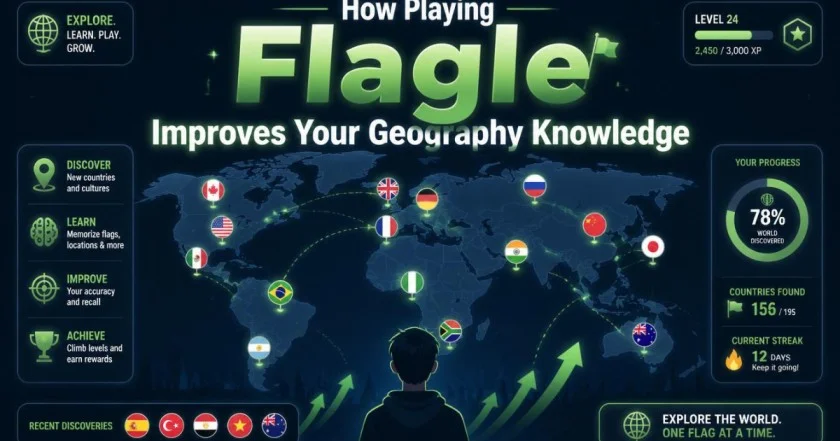
Most people who start playing Flagle do it purely for fun. They want to test themselves, kill a few minutes, maybe beat their previous score. What they do not expect is that a few weeks in, they will start recognizing flags they never knew before, recalling where countries are without thinking, and actually understanding news stories that mention obscure nations they would have previously scrolled past.
This is not a coincidence. Flagle is structured in a way that builds real geographic knowledge through repeated, low-stakes practice. This guide explains exactly what you learn, why games are effective at teaching it, and how to get more out of every session you play.
Table of Contents
- Why Games Teach Geography Better Than Studying
- You Learn to Recognize Flags You Never Studied
- You Build a Mental Map of Country Locations
- You Develop Real Distance and Direction Reasoning
- You Start Noticing Regional Patterns
- How This Knowledge Shows Up in Real Life
- How to Get the Most Geography Learning from Flagle
- A Game That Teaches Without Feeling Like Homework
Why Games Teach Geography Better Than Studying
There is a well-established pattern in learning research: information that arrives in the context of a goal you care about sticks better than information studied in isolation. When you are reading a geography textbook, knowing that Kyrgyzstan borders Kazakhstan is just a fact. When you are playing Flagle and you guess Kazakhstan and get an arrow pointing east, suddenly knowing where Kyrgyzstan is matters right now, because it might be the answer.
That difference in context is enormous. The information arrives when you need it, which is exactly when the brain encodes it most reliably. Research on game-based learning consistently shows that students who learn through interactive games retain geographic concepts better than those who learn through traditional methods, precisely because the knowledge is attached to a concrete goal and immediate feedback.
Flagle gives you this feedback on every single guess. You do not just find out if you were right or wrong. You find out exactly how far off you were and in which direction. That kind of precise, immediate correction is rare in traditional learning and extremely effective at building lasting knowledge.
You Learn to Recognize Flags You Never Studied
Before playing Flagle regularly, most people can confidently identify flags from maybe 20 or 30 countries. The US, UK, Japan, Canada, a handful of European nations, a few others depending on their background. The other 170-plus flags are a blur of colors and symbols they have never paid attention to.
After playing for a few weeks, something shifts. Flags that were completely anonymous start to feel familiar. You start noticing patterns you missed before. The double-headed eagle means Albania. The green, white, and red vertical tricolor with an eagle is Mexico. The plain red and white bicolor is either Denmark (with a cross) or something else entirely.
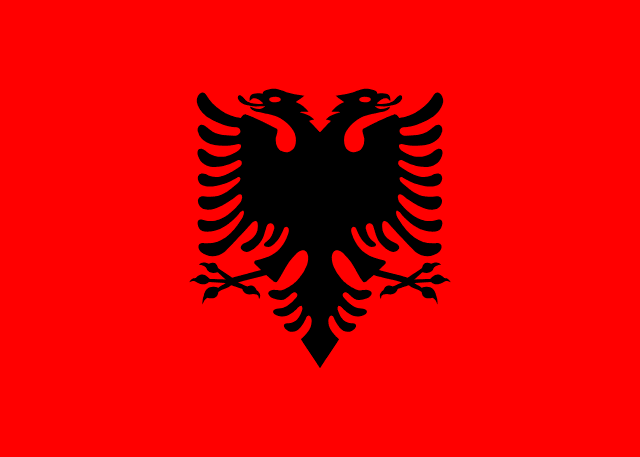 Albania
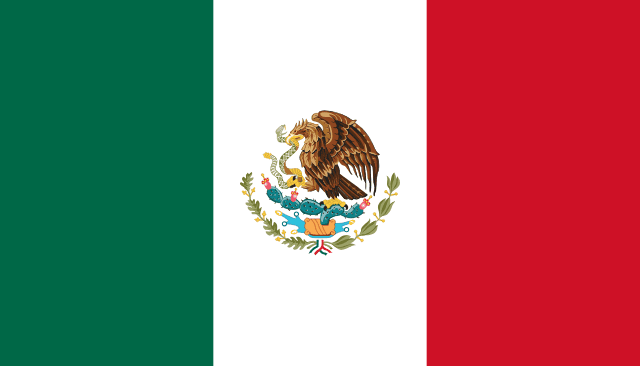 Mexico
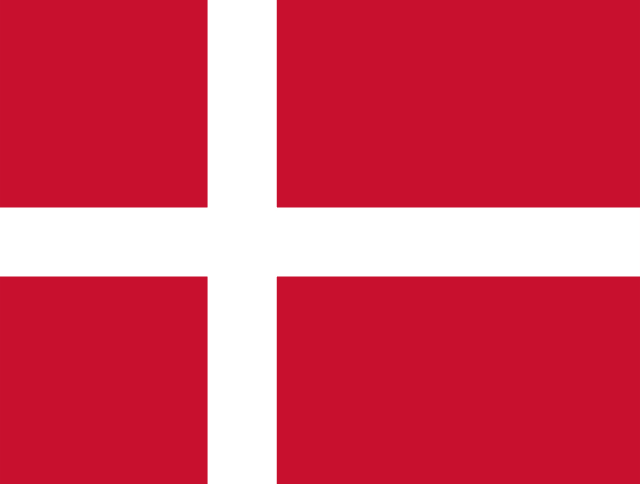 Denmark
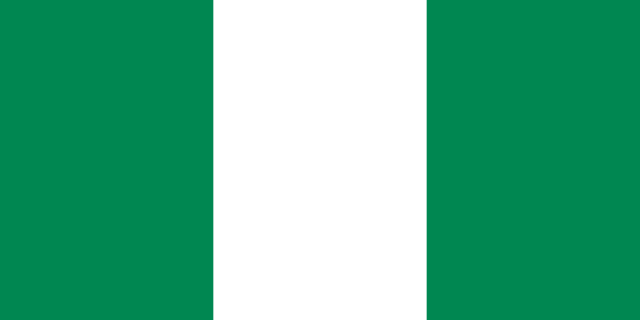 Nigeria
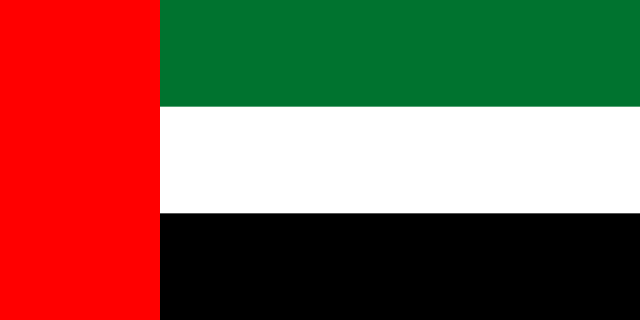 UAE
UAE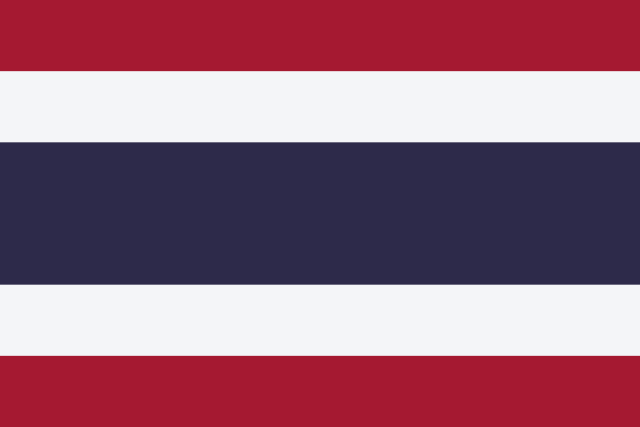 Thailand
This recognition happens not because you sat down and memorized flags, but because repeated exposure in a game context builds pattern recognition automatically. Every time you see a flag and guess wrong, you check the answer. Every time you guess right, your confidence reinforces the memory. Over hundreds of games, the library of flags you know expands steadily.
Players who have been playing for six months often find that they now recognize flags in the news, on travel content, at international events, in ways they never did before. It is a practical skill that transfers directly out of the game.
You Build a Mental Map of Country Locations
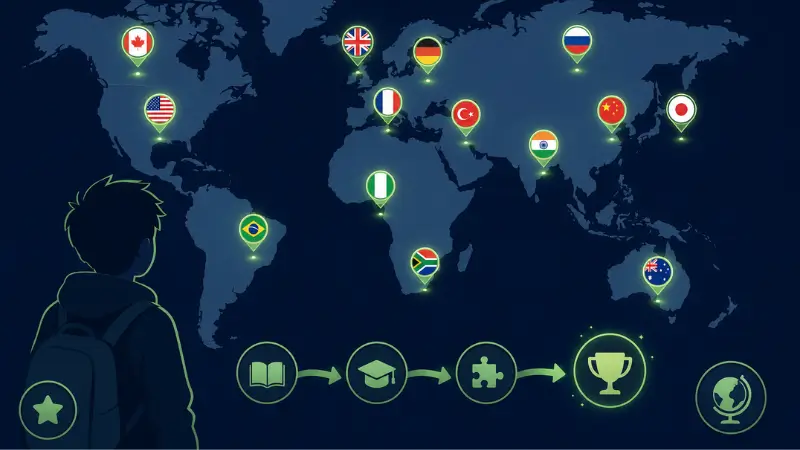
Flag recognition is only half of what Flagle teaches. The other half, and arguably the more valuable half, is country location. To use the distance indicator effectively, you need to know where countries sit relative to each other. And to know that, you need a mental map of the world.
Most people's mental maps are surprisingly sparse. They know roughly where the major continents are. They have a vague sense of where countries they have visited or heard about in the news sit. Everything else is fuzzy. Central Asian republics, small Pacific island nations, landlocked African countries — these tend to be blank spots on most people's internal maps.
Flagle fills in those blank spots through necessity. If you get an arrow pointing northeast from Brazil and a distance of 9,000 km, you need to think about what is 9,000 km northeast of Brazil to make your next guess. That forces you to actively engage with geography in a way that passively watching a documentary never does.
Over time, this active engagement builds a surprisingly detailed mental map. Players who have been playing for a few months often discover they can now place countries like Tajikistan, Malawi, or Suriname on a map roughly correctly — not because they studied those countries, but because they came up in games and the distance indicator forced them to think about where they sit.
The Mental Map Test
Before you start playing Flagle regularly, try to place ten random countries on a blank world map outline. Do the same test after three months of regular play. Most players are genuinely surprised by how much their accuracy improves, especially for countries outside their usual awareness.
You Develop Real Distance and Direction Reasoning
One of the most underappreciated geographic skills is the ability to reason about distances and directions between places. How far is it from Turkey to Thailand? Which direction is Australia from South Africa? Most people have only a vague, imprecise sense of these things.
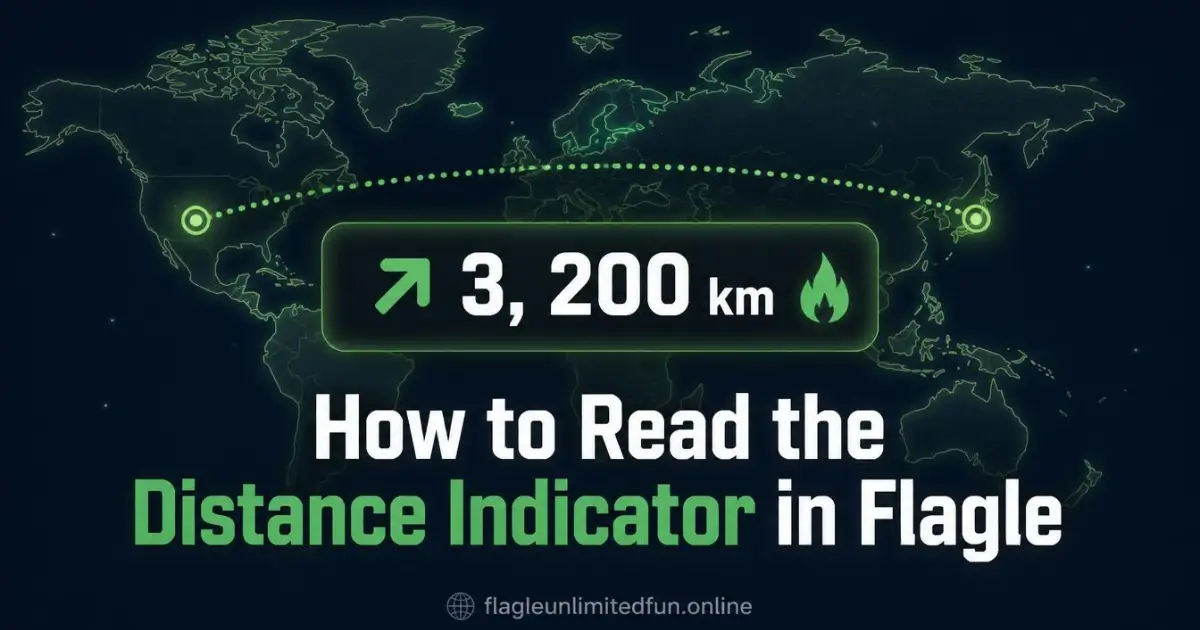
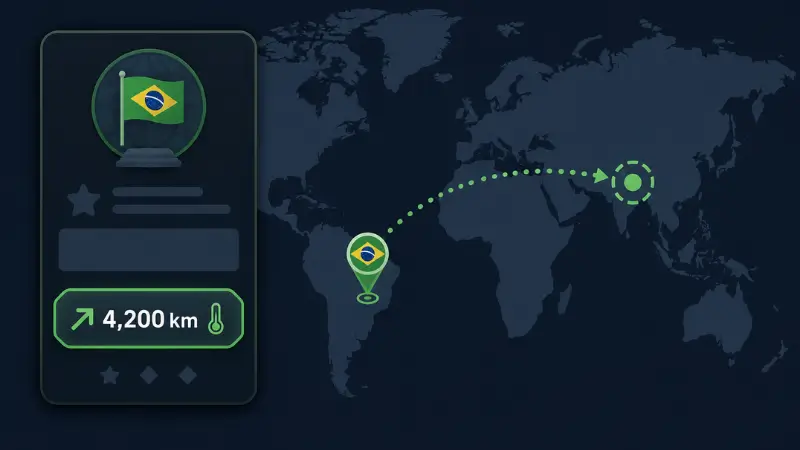
Flagle trains this skill directly. Every time you make a guess, you receive a precise distance in kilometers and an arrow showing the exact direction to the correct answer. Over hundreds of games, you start to internalize what different distances actually mean in geographic terms.
A distance of 500 km starts to feel like neighboring countries. A distance of 3,000 km starts to feel like the same continent but different region. A distance of 8,000 km starts to feel like opposite sides of the world. These intuitions are genuinely useful outside the game. They give you a sense of scale when you read about international events, follow news stories, or think about travel.
The direction reasoning that Flagle builds is equally practical. Understanding that India is roughly southeast of Germany, or that Brazil is roughly southwest of Nigeria, are the kinds of spatial relationships that make the world feel like a coherent map rather than a collection of disconnected names. For a deeper look at how the distance indicator works, read our complete guide to reading the distance indicator.
You Start Noticing Regional Patterns
One of the more subtle things Flagle teaches is the pattern of how flags are grouped by region. This is not something you consciously study. It emerges from repeated exposure.
After seeing enough flags, you start to notice that many West African flags use pan-African colors of red, gold, and green. You notice that many Middle Eastern flags combine red, black, white, and green with Islamic symbols. You notice that Scandinavian countries all use a cross design on their flags. You notice that many Central Asian flags use light blue or sky blue prominently.
These patterns are genuinely useful for playing the game better, but they are also genuinely educational. Understanding that flags often reflect regional, cultural, religious, and historical influences gives you a richer understanding of how those regions relate to each other and to their own histories.
Our Asian flags guide goes deep on these regional patterns specifically for Asia, where the diversity of flag design traditions is particularly striking. Reading it alongside regular play accelerates this pattern recognition significantly.
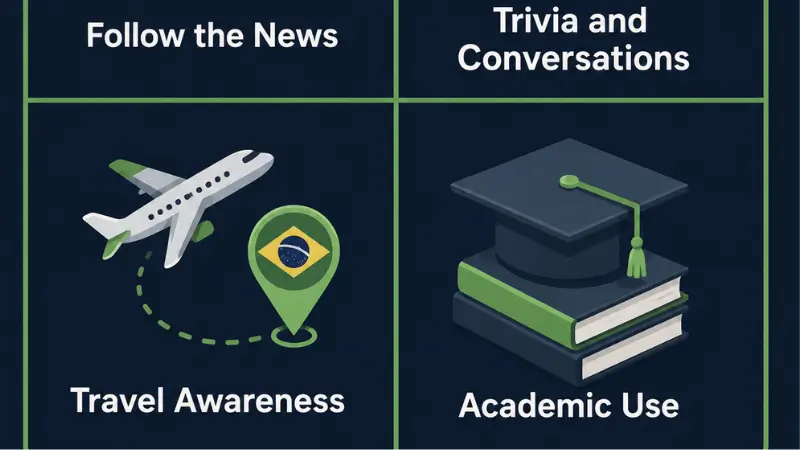
How This Knowledge Shows Up in Real Life
The geography you build through Flagle is not just game knowledge. It shows up in practical ways outside the game.
Following the News
International news makes more sense when you have a mental map of where things are happening. A story about tensions between two neighboring countries is easier to understand when you know roughly where both countries are and how they relate geographically. Players who have been playing Flagle for a few months often report that they follow international news more easily because they now have geographic context they previously lacked.
Conversations and Trivia
Knowing your flags and country locations makes you noticeably better at geography trivia and more comfortable in conversations about international topics. This is a small thing but a consistent one. Regular Flagle players almost always do better on geography-related trivia than they did before they started playing.
Travel and Cultural Awareness
Recognizing flags on packaging, in airports, on jerseys, or in news photos gives you a richer sense of where things come from and where people are from. This kind of ambient geographic awareness is hard to build through deliberate study but comes naturally through regular game play.
Academic and Professional Contexts
For students taking geography, international relations, history, or related subjects, the foundation that Flagle builds is genuinely useful. For professionals working with international clients, suppliers, or partners, knowing where countries are and being able to recognize their flags is a practical competence that most people lack.
How to Get the Most Geography Learning from Flagle
If you want to maximize the educational value of your Flagle sessions, a few habits make a significant difference.
Look Up Every Country You Do Not Know
When you see a flag you do not recognize and find out the answer, spend thirty seconds looking at where that country is on a map. You do not need to study it deeply. Just find it, see what it borders, and notice roughly where it sits in its region. That thirty seconds of active attention is enough to start building the memory.
Use the Distance Indicator Actively
The players who learn the most geography from Flagle are the ones who actively use the distance indicator to reason about locations rather than guessing randomly. Every time you use the indicator to think "if Russia is X km away and the arrow points southwest, the answer must be somewhere in the Middle East or East Africa," you are building real geographic reasoning skills. Our guide on best starting countries explains how to structure these geographic probes.
Play the Daily Challenge
The Daily Challenge adds a social element that reinforces learning. Knowing that other players worldwide are working on the same flag creates a shared context for thinking about that particular country. It is also a natural way to build a consistent daily habit, which is what generates the long-term geographic learning that casual play alone does not.
Read Flag Guides Alongside Playing
Our guide to the hardest flags to identify explains why certain flags are consistently confusing and what visual details to look for. Reading it and then playing immediately afterward creates a context where that knowledge gets immediately tested and reinforced. This is much more effective than reading alone.
A Game That Teaches Without Feeling Like Homework
The best kind of learning is the kind that does not feel like learning. Flagle hits that mark because the game is genuinely enjoyable on its own terms. You play because you want to win, because you want to beat your streak, because you want to see how quickly you can solve the puzzle. The geography knowledge is a byproduct of that enjoyment.
But it is a real byproduct. The mental map you build through regular play is not superficial. Players who have been at it for six months or more develop a working knowledge of world geography that most people never acquire from schooling alone. They know where countries are, they recognize flags, they understand relative distances and directions. All from playing a game they enjoy.
The unlimited mode means you can play as many rounds as you want, which means the learning compounds faster than a once-a-day game would allow. The more you play, the more geography you absorb. It is one of those rare situations where doing more of something fun is also genuinely good for you.
Start with the Daily Challenge for a consistent daily habit, then play as many unlimited rounds as you want to fill in the gaps. Within a few months, you will notice the difference in ways that go well beyond your Flagle score.