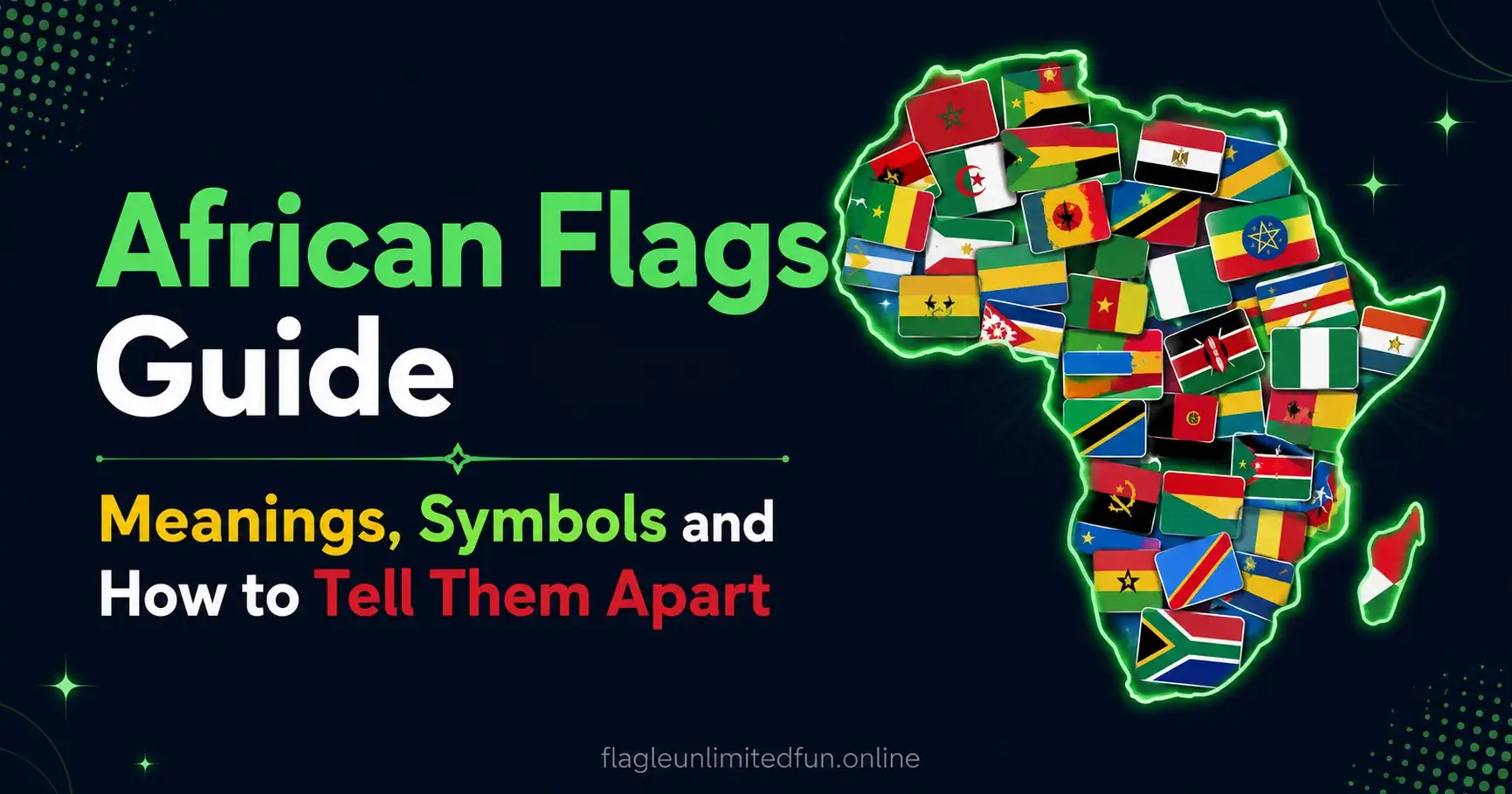
Africa is home to 54 sovereign nations, more than any other continent, and their flags are among the most diverse and symbolically rich in the world. Some follow the Pan-African color tradition of green, yellow, and red. Others carry Islamic symbols from North Africa. Several bear emblems that reference specific historical events, tools, weapons, or wildlife found nowhere outside their borders.
This guide walks through Africa by region, explains the major design traditions, and gives practical tips for telling the flags apart. If you play Flagle Unlimited, Africa is one of the most challenging continents precisely because so many flags share the same three colors. Understanding why they look similar and what details distinguish them is the fastest way to improve your score on African flags.
The Pan-African Color Tradition
Green, yellow, and red appear together on more African flags than any other color combination. These colors trace back to Ethiopia, whose flag predates European colonialism and became a symbol of African independence and resistance. When Ghana became the first sub-Saharan nation to gain independence in 1957, it explicitly adopted these colors. Dozens of other nations followed. Today these three colors appear on the flags of Guinea, Mali, Senegal, Cameroon, Congo, Togo, Burkina Faso, and many others — always with specific regional or national meanings layered on top of the shared Pan-African symbolism.
Table of Contents
- North African Flags
- West African Flags
- East African Flags
- Central African Flags
- Southern African Flags
- How to Tell Similar African Flags Apart
- African Flags in Flagle — A Strategy Guide
North African Flags
North African flags are shaped primarily by Islamic tradition and Arab identity rather than the Pan-African color movement that dominates sub-Saharan Africa. Green, white, and red appear frequently, but their meanings come from the Islamic and Arab political traditions rather than the Ethiopian independence legacy.
 Egypt
Egypt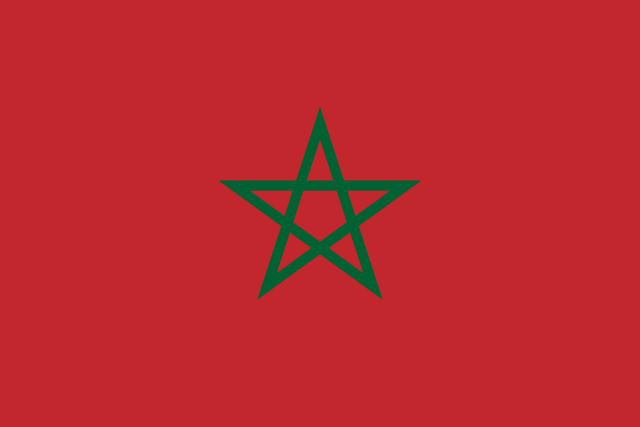 Morocco
 Algeria
 Libya
Libya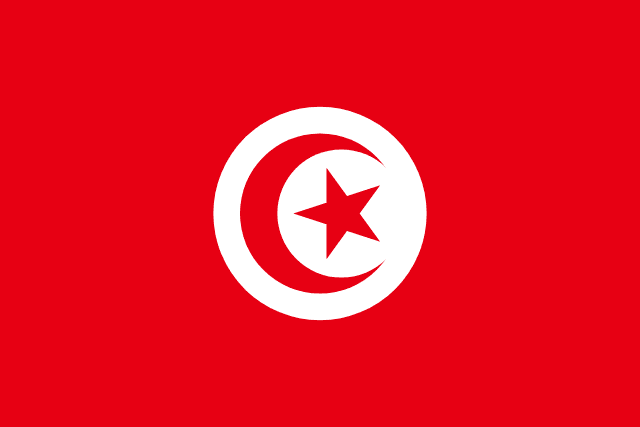 Tunisia
 Sudan
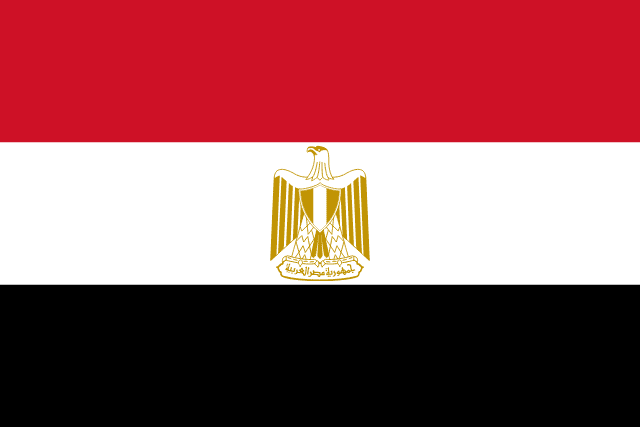
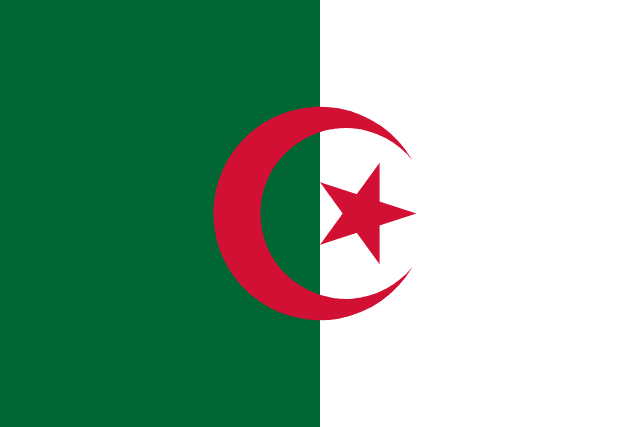
SudanEgypt uses the Pan-Arab colors of red, white, and black in horizontal stripes, with a golden Eagle of Saladin at the center. The red represents the blood of the revolution, the white represents the bright future, and the black represents the dark period of oppression that ended with independence. Morocco uses a distinctive red field with a green five-pointed star called the Seal of Solomon, one of the simplest and most instantly recognizable flag designs in Africa. Algeria splits its flag vertically into green and white, with a red crescent and star at the center. The green represents Islam and the mountains, the white represents purity and peace.
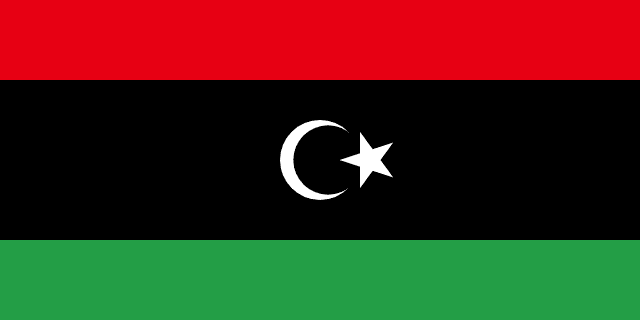
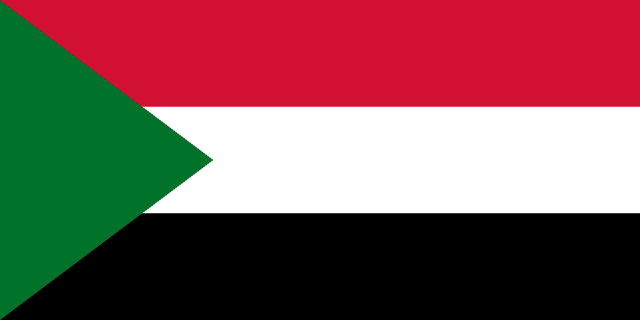
Libya uses black, red, and green horizontal stripes with a white crescent and star. The black stripe in the center is twice the width of the red and green stripes, giving it a distinctive weight. Tunisia uses an unusual design: a red field with a white circle at the center containing a red crescent and star. The circle represents the sun, making Tunisia's flag one of the few in the world to use a circle as a primary design element. Sudan uses the Pan-Arab colors with a green triangle at the hoist, similar to Jordan's design but with different proportions and no star.
Recognition Tips for North Africa
Morocco is the easiest to identify: solid red with a single green star. Algeria is the only flag with a vertical green-white split in North Africa. Egypt and Syria look similar, both using red, white, and black stripes, but Egypt has the Eagle of Saladin while Syria has two green stars. Libya's wide black center stripe is distinctive among the horizontal tricolor flags in the region.
West African Flags
West Africa is the heartland of the Pan-African color tradition. More countries here use green, yellow, and red than in any other African region, and the visual similarity between them is the single biggest challenge for flag players covering this part of the continent.
 Ghana
Ghana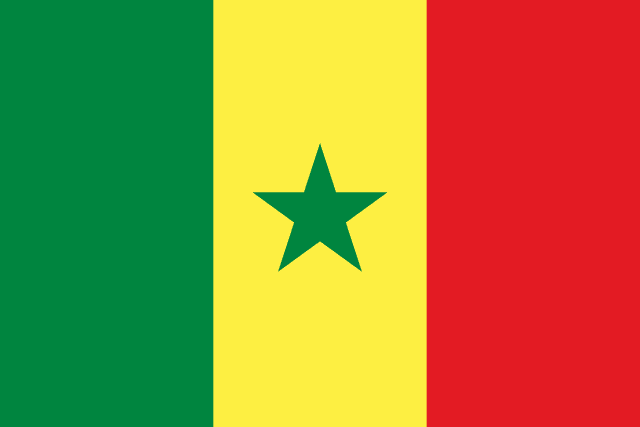 Senegal
 Mali
Mali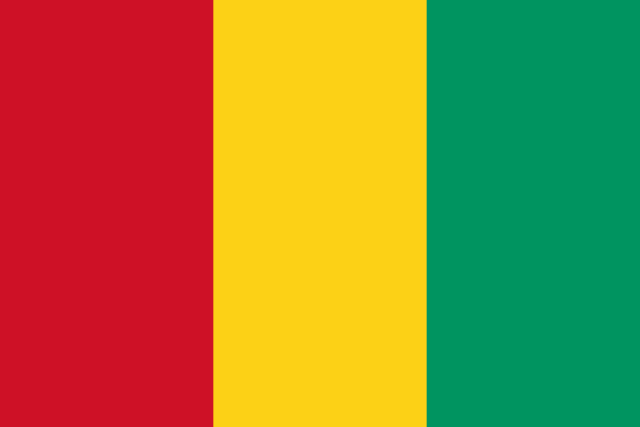 Guinea
 Cameroon
 Nigeria
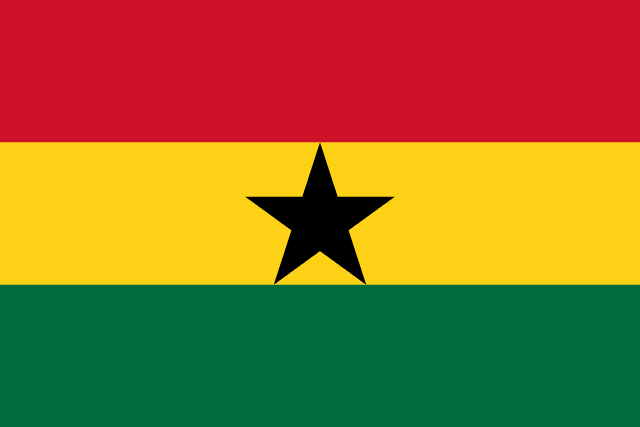
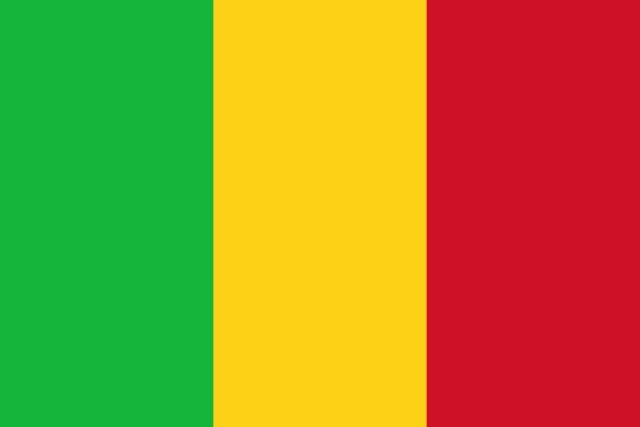
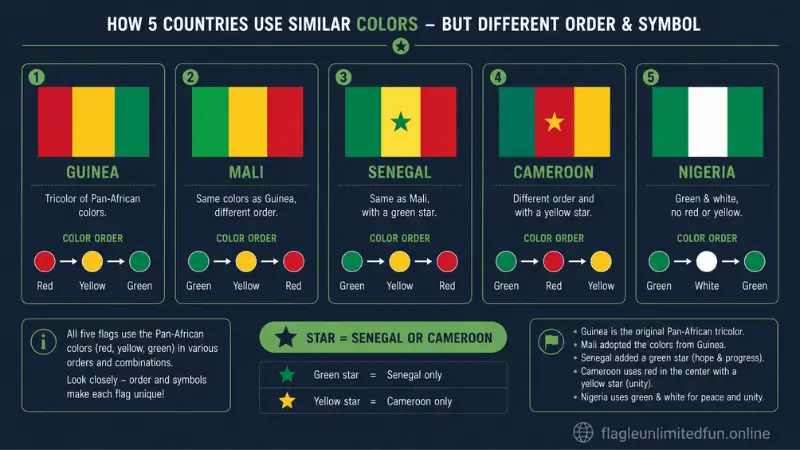
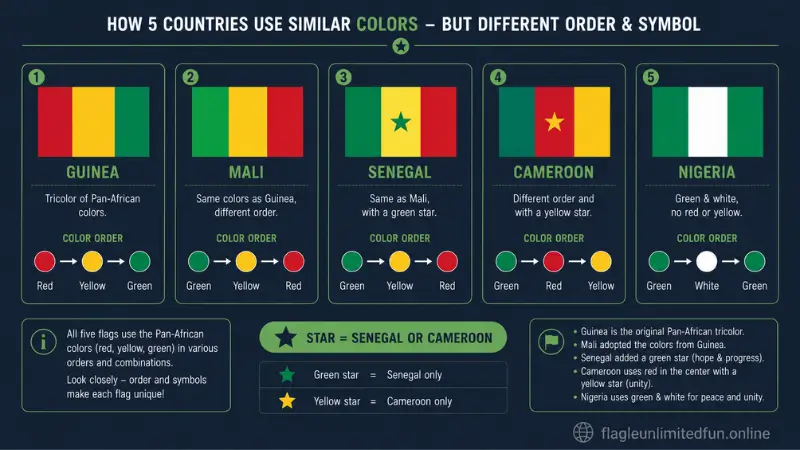
Ghana was the first sub-Saharan African nation to gain independence, in 1957, and its flag set the template for many that followed: red, gold, and green horizontal stripes with a black five-pointed star at the center. The star is called the Black Star of Africa and represents African freedom. Senegal uses the same three colors as Ghana but in vertical stripes with a green star at the center. Mali uses green, yellow, and red vertical stripes with no central emblem, making it one of the simplest Pan-African tricolors. Guinea uses the same three colors as Mali but in reverse order: red, yellow, green from left to right.
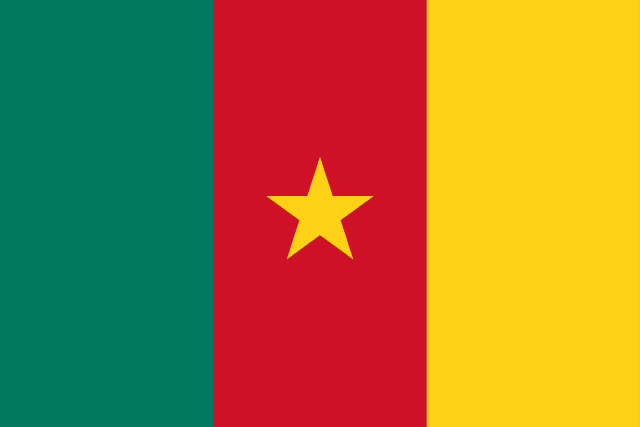
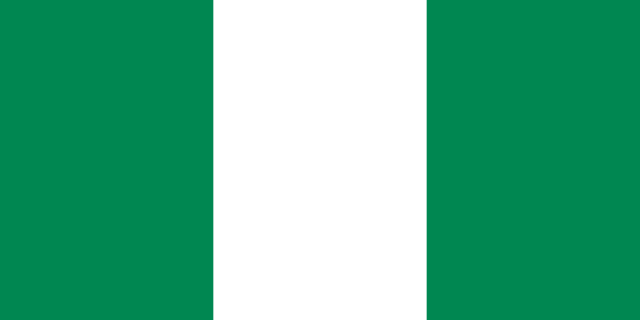
Cameroon uses green, red, and yellow vertical stripes with a small yellow star at the center of the red stripe. Nigeria breaks from the Pan-African color tradition entirely: its flag is a simple green-white-green vertical tricolor with no emblem. The green represents Nigeria's agricultural wealth and forests, the white represents peace and unity.
Recognition Tips for West Africa
Ghana is the only flag with a black star on a horizontal tricolor. Nigeria is the only green-white-green flag in Africa. For the vertical tricolors, the key is color order. Guinea goes red-yellow-green left to right. Mali goes green-yellow-red. Senegal adds a green star to the center. Cameroon adds a small yellow star on the red stripe. These small differences are the entire distinction between flags that otherwise look nearly identical.
East African Flags
East African flags show more variety than West Africa. The region includes flags influenced by Islam in the Horn of Africa, flags reflecting tribal heritage and independence struggles in the Great Lakes region, and flags with distinctive color combinations that have no equivalent elsewhere on the continent.
 Ethiopia
 Kenya
Kenya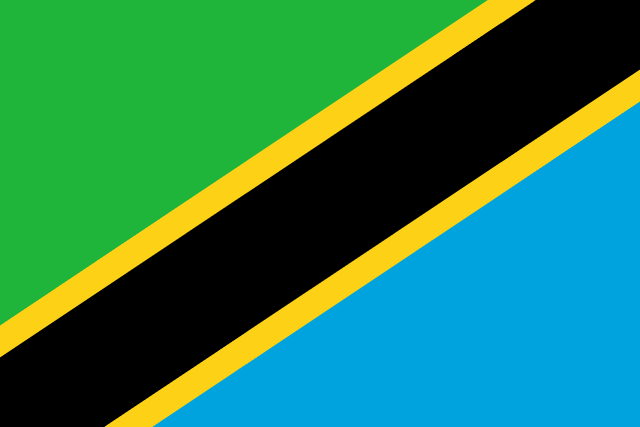 Tanzania
 Somalia
 Uganda
 Rwanda
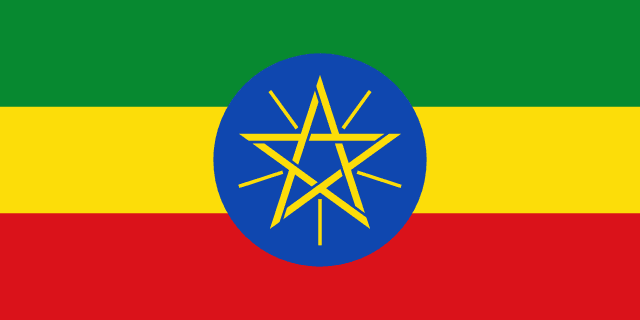
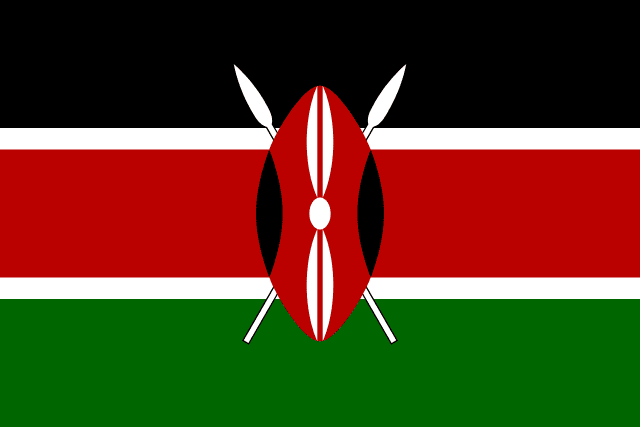
Ethiopia is the source of the Pan-African color tradition: its green, yellow, and red tricolor predates independence movements across Africa. The current flag adds a blue circle with a golden sun emblem at the center, representing the unity and diversity of the Ethiopian people. Kenya uses black, red, and green horizontal stripes with a Maasai warrior's shield and two crossed spears at the center. The shield is one of the most distinctive emblems on any African flag. Tanzania uses a diagonal design: a black stripe bordered by yellow runs from the lower left to the upper right, dividing a green upper triangle from a blue lower triangle.
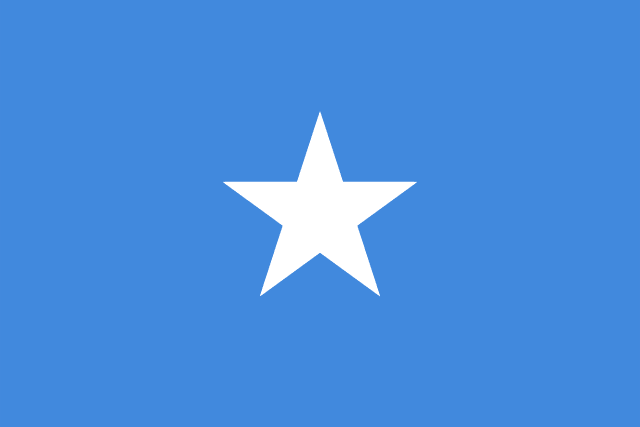
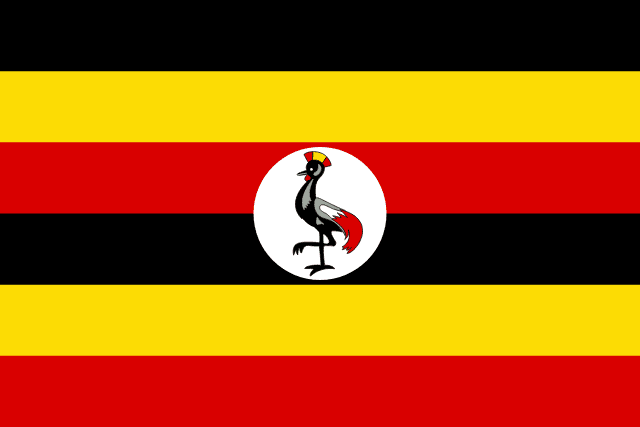
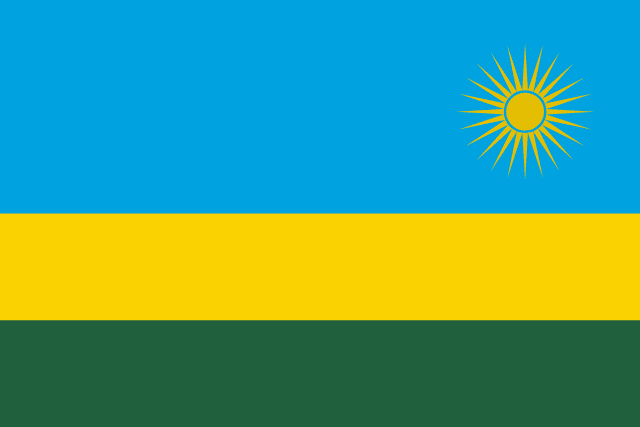
Somalia uses a light blue field with a single white star. The light blue is the same shade as the United Nations flag, reflecting the UN's role in Somali independence. Uganda uses six alternating black, yellow, and red horizontal stripes with a grey crowned crane in a white circle at the center. The crowned crane is Uganda's national bird. Rwanda uses blue, yellow, and green horizontal stripes with a yellow sun in the upper right corner, one of the few flags to place its emblem off-center deliberately.
Recognition Tips for East Africa
Kenya's shield and spears make it immediately identifiable. Tanzania's diagonal design is unique among African flags. Somalia's light blue field is distinctive. Uganda's alternating six-stripe pattern with a bird is unlike anything else in the region. Ethiopia uses the Pan-African colors but adds the distinctive blue circle that no other flag has.
Central African Flags
Central Africa includes some of the most visually distinctive flags on the continent, alongside some that blend into the Pan-African color tradition. The region includes the Democratic Republic of Congo, one of the largest countries in Africa, as well as several smaller nations with flags that reference the equatorial rainforest environment.
 DR Congo
 Rep. of Congo
 Gabon
Gabon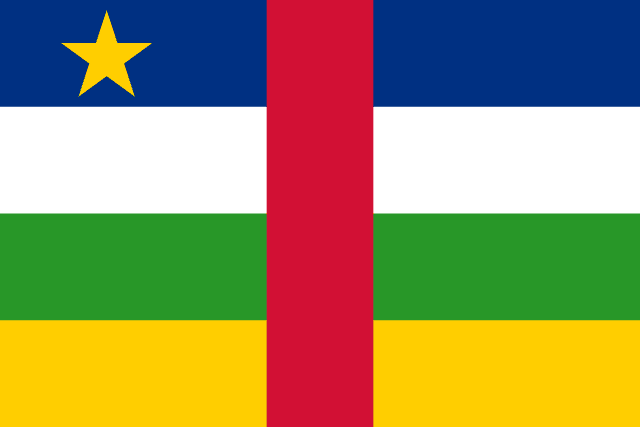 CAR
CAR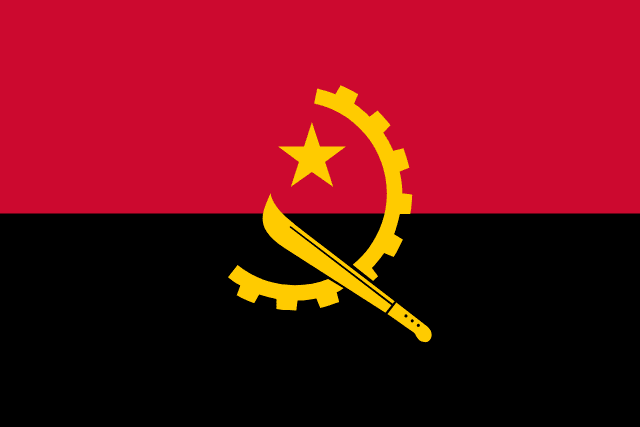 AngolaCameroon
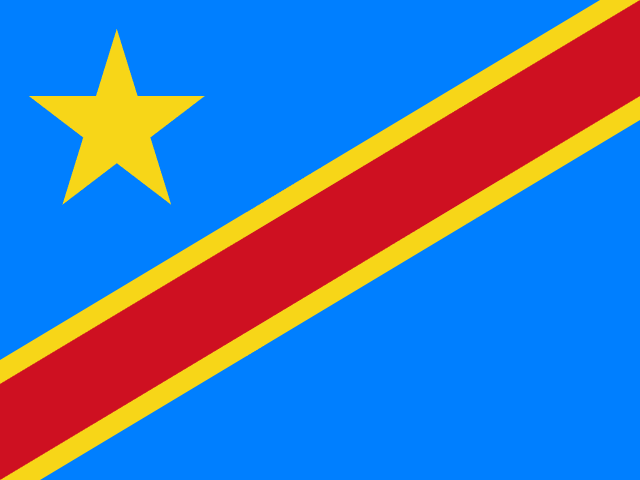
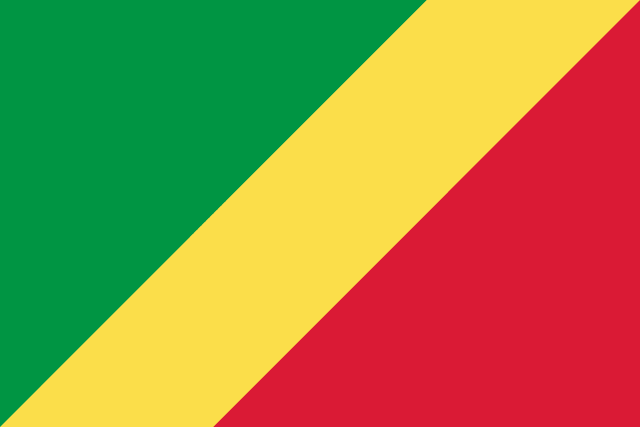
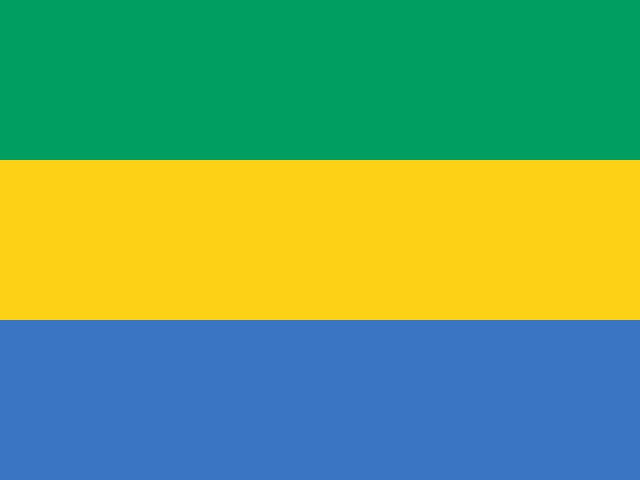
The Democratic Republic of Congo uses a sky blue field with a diagonal red stripe bordered by narrow yellow lines, and a yellow star in the upper left. The sky blue represents peace, the red represents the blood of the country's martyrs, and the yellow represents the country's mineral wealth. The Republic of Congo, which is a separate country from the DR Congo, uses a diagonal design with green, yellow, and red stripes running from the lower left to the upper right. Gabon uses a simple horizontal tricolor of green, yellow, and blue. The blue is unusual among African flags and represents the Atlantic Ocean on Gabon's western coast.
Angola uses a red and black horizontal bicolor with a yellow emblem at the center: a half-gear wheel, a machete, and a star. The gear and machete deliberately echo the Soviet hammer and sickle, reflecting the Marxist-Leninist ideology of the MPLA party that led Angola's independence struggle. The Central African Republic uses five horizontal stripes of blue, white, green, yellow, and red, cut vertically by a yellow stripe with a red star — one of the most complex stripe arrangements in Africa.
Recognition Tips for Central Africa
DR Congo's sky blue with a diagonal stripe is distinctive. Angola's black and red bicolor with the machete-gear emblem is unique. Gabon's blue stripe separates it from most other African flags. The Republic of Congo uses diagonal stripes rather than horizontal or vertical, which makes it easier to distinguish from its neighbors.
Southern African Flags
Southern Africa's flags include some of the most sophisticated design work on the continent. South Africa's flag, adopted in 1994 after the end of apartheid, is widely considered one of the best-designed national flags in the world. The region also includes several flags that incorporate traditional symbols and wildlife.
 South Africa
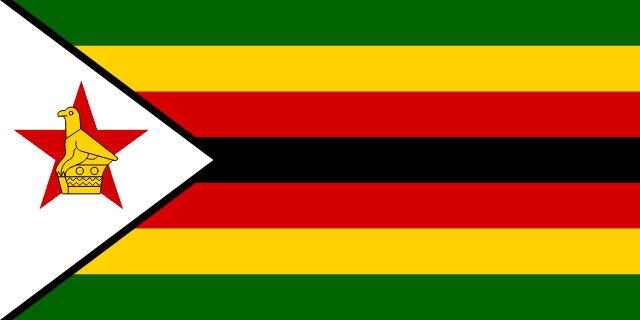 Zimbabwe
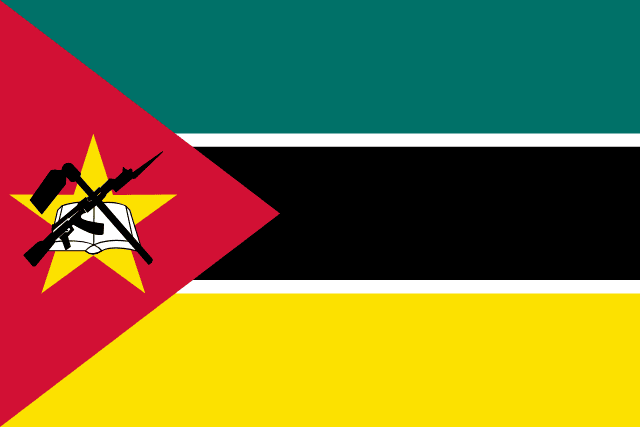 Mozambique
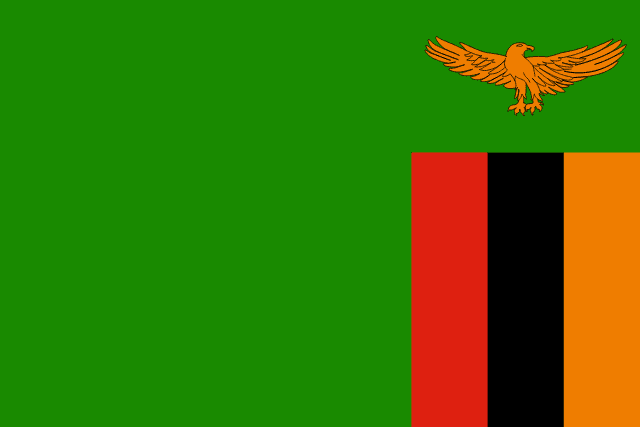 Zambia
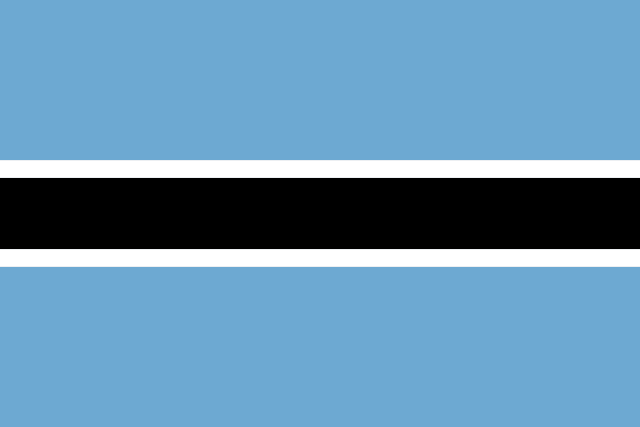 Botswana
 Namibia
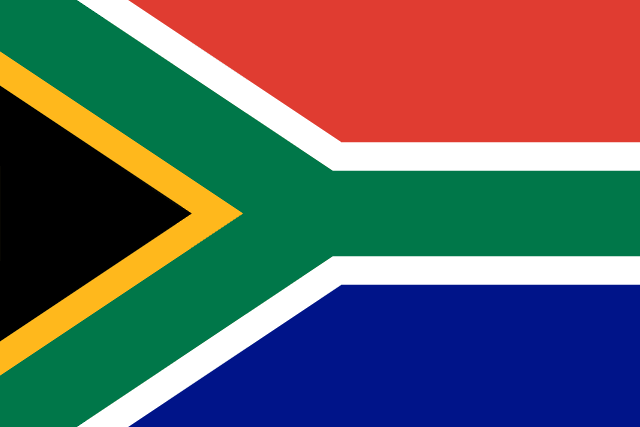
South Africa's flag uses six colors: black, gold, green, white, red, and blue. A green horizontal Y-shape runs from the hoist and splits into two arms that meet the top and bottom edges. The six colors incorporate the colors of all major political movements in South Africa, making the flag a deliberate synthesis rather than a statement of one ideology. Zimbabwe uses seven horizontal stripes of green, yellow, red, black, red, yellow, and green, with a white triangle at the hoist containing a red star and the Zimbabwe Bird, a soapstone carving found at the ruins of Great Zimbabwe. Mozambique is the only national flag with a modern firearm — an AK-47 with a bayonet — crossed over a hoe and book in a red triangle.
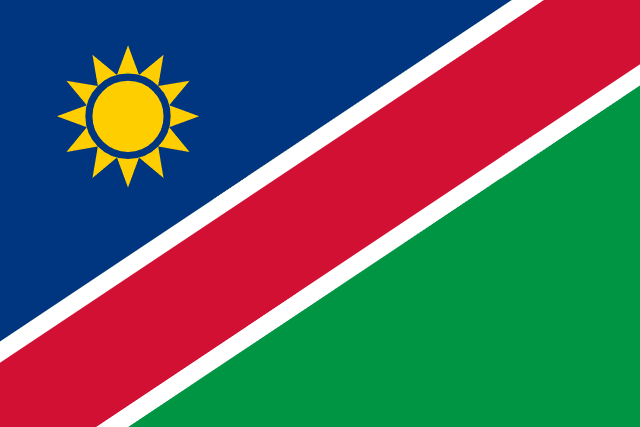
Zambia uses a green field with an orange eagle in the lower right corner and three vertical stripes of red, black, and orange at the right side. The placement of the eagle in the lower right is unique among national flags worldwide. Botswana breaks completely from the Pan-African color tradition: its flag uses light blue, black, and white. The light blue represents water in a semi-arid country where rainfall is precious. Namibia uses a diagonal design with blue, red, and green, and a golden sun in the upper left corner.
Recognition Tips for Southern Africa
South Africa's six-color Y-design is immediately recognizable and unlike any other flag in the world. Zimbabwe's seven stripes and Zimbabwe Bird are distinctive. Mozambique's AK-47 triangle is unique worldwide. Botswana's blue, black, and white stands completely apart from every other African flag. Zambia's eagle in the lower right corner is a design found nowhere else.
How to Tell Similar African Flags Apart
The hardest flag pairs in Africa for Flagle players are the ones that use the same three Pan-African colors in similar arrangements. Here is a practical breakdown of the most commonly confused groups:
Guinea vs Mali vs Senegal vs Cameroon
All four use green, yellow, and red in vertical stripes. Guinea goes red-yellow-green. Mali goes green-yellow-red. Senegal adds a green star to the yellow center stripe. Cameroon adds a small yellow star to the red center stripe and uses green-red-yellow rather than the standard order. The star is the fastest visual anchor: if there is a star, it is either Senegal or Cameroon. If there is no star, compare the color order.
Ethiopia vs Bolivia
Ethiopia uses green, yellow, and red horizontal stripes with a blue circle and gold emblem at the center. Bolivia uses the same three colors but with red on top, no central emblem, and is in South America. In Flagle, the distance indicator resolves this immediately: Africa means Ethiopia, South America means Bolivia. Read our distance indicator guide for the method.
Egypt vs Syria vs Iraq
All three use red, white, and black horizontal stripes, the Pan-Arab color scheme. Egypt has the Eagle of Saladin in gold. Syria has two small green stars. Iraq has Arabic text in green in the center. The central emblem is the only reliable visual distinction at flag size.
DR Congo vs Republic of Congo
Two neighboring countries, both called Congo, with very different flags. DR Congo uses a sky blue field with a diagonal red stripe. Republic of Congo uses a diagonal green-yellow-red design. The sky blue of DR Congo is completely distinctive; it does not appear on any other flag in the region.
Flagle Strategy for African Flags
When the distance indicator places you in Africa, your first question should be: what color dominates the flag? If you see Pan-African colors (green, yellow, red), look for a star or emblem. If there is a star, check its color and position. If there is no star, check the color order of the stripes. If the flag is blue, light blue, or has unusual colors like Botswana's black and white, that eliminates most of Africa immediately. Use the best starting countries guide to learn which first guess gives you the most useful geographic data for narrowing down African flags.
African Flags in Flagle: A Strategy Guide
Africa is the most challenging continent for most Flagle players because the density of similar flags is higher here than anywhere else. A systematic approach makes the difference between guessing randomly and solving efficiently.
The first step when you know you are in Africa is to identify the design structure: is the flag a horizontal tricolor, a vertical tricolor, a diagonal design, or something else? Diagonal designs immediately narrow you to a short list including Tanzania, Republic of Congo, Namibia, and a few others. Horizontal tricolors with Pan-Arab colors place you in North Africa. Vertical tricolors with green, yellow, and red place you in West or Central Africa.
The second step is to look for any distinguishing emblem: a star, an animal, a weapon, a coat of arms. The presence of an emblem almost always identifies the specific country uniquely. The absence of an emblem leaves you with a smaller group of plain tricolors where color order is everything.
The third step is to use the distance and direction from your geographic probe guess to confirm which sub-region of Africa you are in. A flag in West Africa and a flag in East Africa might use the same colors, but the distance indicator will place them in completely different parts of the continent. Combining visual analysis with geographic reasoning is how the best players solve African flags consistently in two or three attempts. For more on this combined approach, read our complete improvement guide and practice daily with the Daily Challenge.